The United States is preparing to temporarily ease sanctions on Equatorial Guinea’s Vice President, Teodoro “Teddy” Nguema Obiang, a figure long accused of embezzlement and lavish excess. According to the Los Angeles Times, the State Department will grant him a one-month waiver, enabling travel to New York for UN meetings and to Miami and Los Angeles for private engagements (Los Angeles Times).
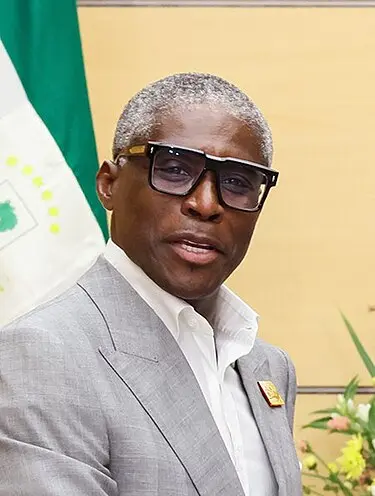
At first glance, this decision appears puzzling. Why would Washington, which has consistently condemned Obiang’s alleged corruption, suddenly soften its stance? The answer lies less in morality and more in geopolitical realpolitik.
Washington’s calculated pivot
Equatorial Guinea may be small in population, but its oil wealth and Atlantic coastline give it outsized strategic importance. Recent reports suggest Beijing has been deepening its ties with Malabo, including discussions over a potential Chinese naval base on the Atlantic coast (CSIS). For Washington, such a development would be a game-changer, directly challenging U.S. security interests.
By granting Obiang this diplomatic leeway, the U.S. is signaling a willingness to engage, even with leaders it has long criticized, to counter Beijing’s growing reach. This is less about Obiang himself and more about preventing China from securing a strategic foothold in the Atlantic.
Realpolitik vs. values
This move reflects the age-old tension in U.S. foreign policy: the clash between values and interests. On one hand, Washington promotes itself as a champion of democracy and anti-corruption. On the other, it is prepared to sidestep these ideals when core strategic interests are threatened.
As one Africa analyst put it, “This is not an endorsement of Obiang. It’s a chess move in a larger game” (Al Jazeera).
For African observers, the waiver is a reminder that external powers rarely engage on the continent out of principle. Instead, Africa is too often viewed as a battleground for influence, where governance concerns take a back seat to power competition.
Implications for Africa
For Equatorial Guinea, the waiver offers short-term legitimacy and leverage in its dealings with both Washington and Beijing. For the U.S., it reflects urgency in countering China’s Atlantic ambitions. But for Africa at large, the development raises a deeper question: will the continent’s future be defined by external rivalries rather than African agency?
Togo’s recent call for “Africa’s strategic autonomy” underscores this need (Togo First). If African states fail to set their own terms, they risk remaining pawns in a larger geopolitical chess match.
The U.S. decision to ease sanctions on Teddy Obiang is not a gesture of friendship, it is a calculated maneuver in a high-stakes contest with China. As this rivalry deepens, African leaders face a pivotal choice: remain spectators in this power struggle, or assert a collective vision where Africa is a player shaping the game, not just the board it is played on.