On September 2, 2025, Chinese Foreign Ministry Spokesperson Guo Jiakun reaffirmed Beijing’s Global Governance Initiative (GGI), a vision first unveiled by President Xi at the Shanghai Cooperation Organization summit. At its core, the initiative rests on five principles: sovereign equality, adherence to international rule of law, commitment to multilateralism, people-centered values, and action-oriented policies.
To some, these may sound like diplomatic buzzwords. Yet for Africa, they carry significant weight. The continent has long grappled with uneven partnerships, external interference, and limited influence in global decision-making. By emphasizing equality and inclusivity, China is positioning itself as a champion of reform in international governance structures an offer many African governments find appealing.
The soft power play
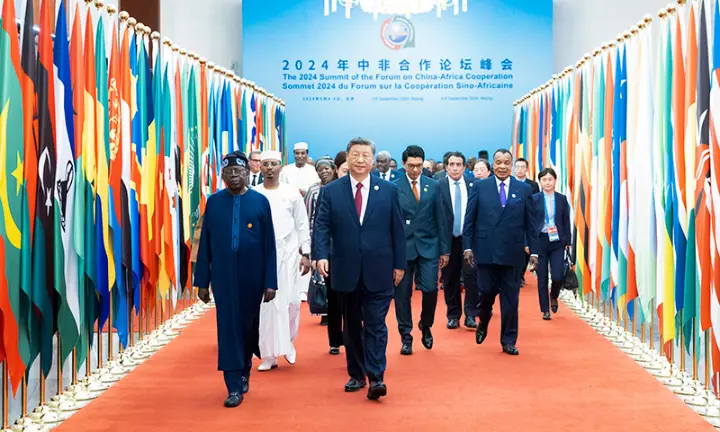
China’s engagement with Africa has never been just about trade or infrastructure. It’s also about ideas, narratives, and influence. Through the GGI, Beijing projects itself as a credible alternative to Western-led systems that are often criticized for being hierarchical and exclusionary.
For African states, this framing resonates. Many feel sidelined in institutions like the UN Security Council or the World Bank, where voting power reflects post-World War II realities rather than today’s global order. China’s promise of a “fairer, multipolar world” taps directly into Africa’s desire for greater recognition and agency. In diplomatic terms, this is soft power at work, winning hearts, not by force, but by offering a vision that reflects African aspirations.
Multilateralism with Chinese characteristics
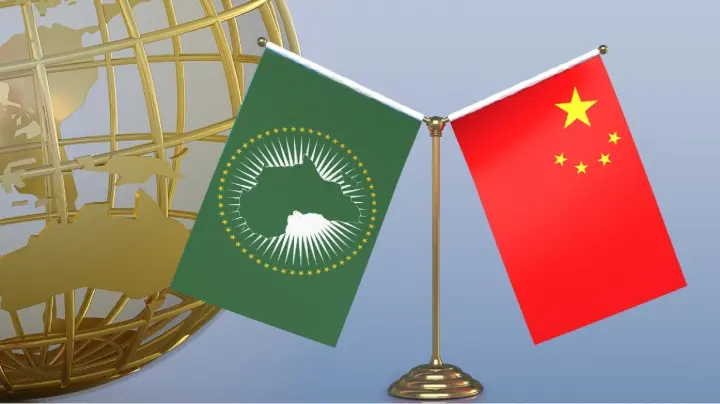
Another key dimension of the GGI is multilateral cooperation. China has consistently emphasized that global challenges, from climate change to pandemics, require inclusive, collective action. Africa, with its strong regional blocs such as the African Union and ECOWAS, is well placed to engage on this front.
The question is whether China’s version of multilateralism is truly inclusive, or whether it subtly reinforces dependency. While Beijing invests heavily in infrastructure, digital connectivity, and green energy across Africa, critics caution that these partnerships can create long-term financial and political obligations. The GGI could therefore be a double-edged sword: empowering Africa in global forums, while also deepening reliance on Chinese systems and standards.
What comes next?
Ultimately, the GGI’s appeal in Africa lies in its promise of partnership without domination. If implemented sincerely, it could amplify Africa’s voice in global governance and strengthen south-south cooperation. Yet the continent must tread carefully leveraging China’s diplomatic overtures without sacrificing its independence or falling into one-sided alignments.
As global power balances shift, Africa finds itself courted not only by China, but also by Russia, the West, and emerging blocs in the Global South. The challenge is clear: to seize opportunities offered by initiatives like the GGI, while ensuring that Africa sets its own terms for engagement.
In this evolving landscape, China’s Global Governance Initiative may well be remembered not just as a policy framework, but as a test case for Africa’s ability to navigate a multipolar world.