The tarmac at Jomo Kenyatta International Airport (JKIA) in Nairobi has seen many historic arrivals, but the touchdown of the final contingent of Kenyan police officers on March 17, 2026, carried a singular weight. As 215 officers stepped off the plane, greeted by the sharp salutes of the top brass and the tearful relief of families, the air was thick with a "Mission Accomplished" sentiment. For eighteen months, Kenya had shouldered the burden of leading the Multinational Security Support (MSS) mission in Haiti - a feat of Global South leadership that many skeptics thought impossible.
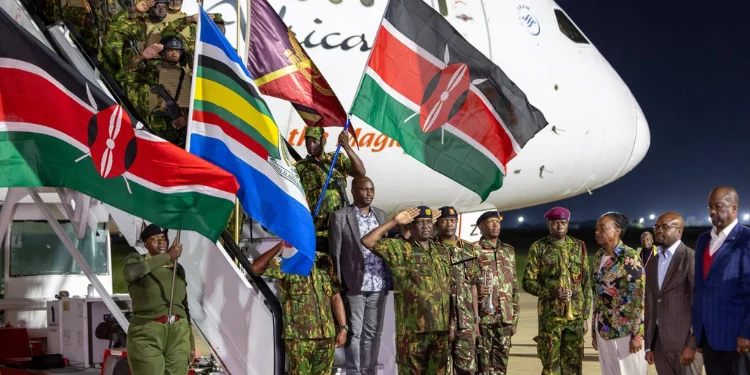
Yet, as the celebratory parades wind down in Nairobi, a starkly different reality remains etched into the streets of Port-au-Prince. Despite the Kenyan presence, criminal gangs still exercise a suffocating grip on nearly 90% of the Haitian capital. The baton is now being passed, not just to a new nation, but to a new strategy. As Chadian forces prepare to take the lead under the newly minted, UN-backed Gang Suppression Force (GSF), the world is watching to see if this transition can finally turn the tide for the 5.7 million Haitians facing acute food insecurity.
The Kenyan legacy: pride vs. proximity
In June 2024, when the first Kenyan boots hit Haitian soil, the mission was hailed as a landmark in Pan-Africanism. Kenya wasn’t just exporting security; it was exporting a specific brand of community policing and mediation. Over the last year and a half, Kenyan forces successfully secured the Toussaint Louverture International Airport and the main port - vital lifelines for a country on the brink.
However, an honest assessment for The African Diplomat requires us to look past the optics. While the Kenyans held the "green zones," the "red zones" remained a labyrinth of gang rule. The MSS faced significant hurdles: limited intelligence on the ground, a language barrier that hampered community trust, and a legal mandate that many Haitian civil society groups felt was too restrictive to actually dismantle the gang structures. In Nairobi, the mission is viewed as a diplomatic triumph that boosted Kenya's standing in Washington; in Port-au-Prince, it is seen as a brave but ultimately insufficient holding action.
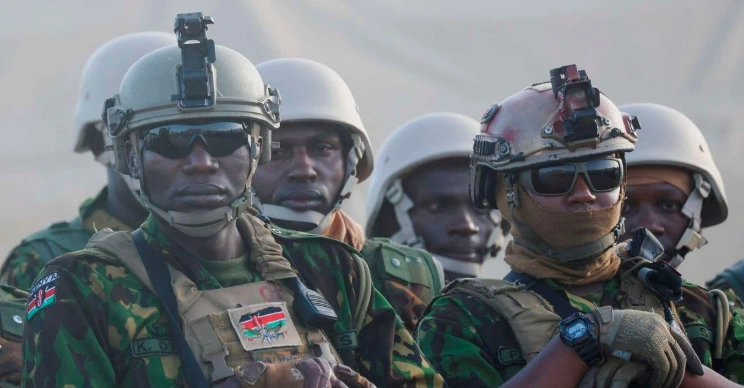
Members of the first contingent of Kenyan police stand in formation after arriving in the Caribbean country as part of a peacekeeping mission, in Port-au-Prince, Haiti June 26, 2024.
The strategic shift
The transition currently underway is more than a change of uniforms; it is a fundamental "Tactical Refresh." The Kenyan-led MSS was designed to support the Haitian National Police. The new Gang Suppression Force (GSF), which aims to reach 5,500 personnel by October 2026, carries a more robust mandate.
The GSF is designed with stronger arrest powers and a proactive offensive posture. This shift acknowledges a hard truth: you cannot "support" a police force that is fundamentally outgunned and infiltrated. The GSF represents a hybrid model non-UN in its core troop contribution (South-South cooperation), yet UN-backed in its logistical and legal framework. This allows for the agility of a coalition mission with the legitimacy (and funding) of the UN.
The Chadian factor: Sahelian grit in an urban jungle
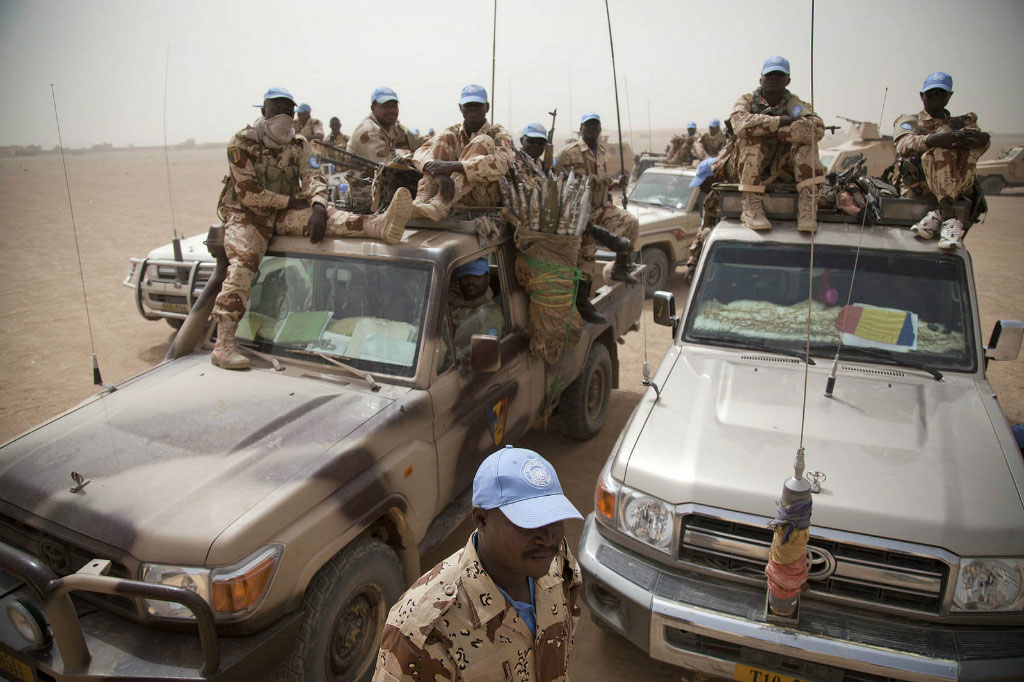
The most striking element of this transition is the arrival of 800 Chadian police and gendarmes, scheduled to be fully deployed by June 2026. To the uninitiated, Chad might seem like an unlikely successor. However, for those familiar with African security architecture, the choice is strategic.
Chad possesses a unique pedigree in counter-insurgency. Having spent decades battling Boko Haram and various rebel groups in the Sahel, Chadian forces are accustomed to operating in environments where the line between "civilian" and "combatant" is blurred by fear and coercion.
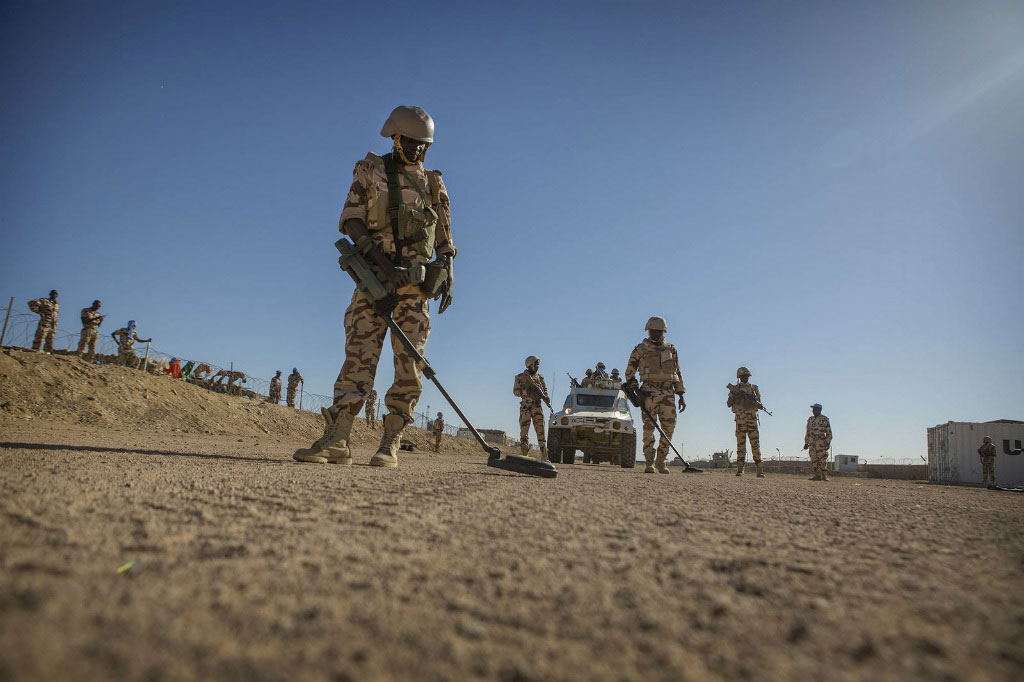
The Chadian troops protect convoys in the most dangerous regions controlled by terrorist groups. Pictured, officers checking for explosives.
Why the Sahel connection matters for Haiti:
Urban guerilla experience: Haitian gangs operate like insurgents, utilizing human shields and complex urban terrain. Chad’s experience in asymmetrical warfare is far more applicable here than traditional riot control.
Hardened resolve: There is a perception in diplomatic circles that Chadian forces bring a level of "combat-readiness" that may be necessary to reclaim gang-held neighborhoods like Cité Soleil.
South-South precedent: This move cements the idea that African nations are the primary providers of stability in the Global South, moving away from the "Western-savior" tropes of the past.
Geopolitical friction: The Washington-Nairobi-N'Djamena triangle
This transition is not without its diplomatic knots. Just as Washington D.C. served as the stage for the Washington Accords regarding the Rwanda-DRC crisis, it remains the primary logistical and financial engine behind the Haiti mission.
Recent debates have surfaced regarding the training of Chadian troops. Reports that elements of the Chadian contingent were being trained on U.S. soil sparked domestic pushback in both N'Djamena and Washington. Critics point to Chad’s own checkered human rights record, questioning if a force accused of heavy-handedness at home can be the guardian of human rights in Port-au-Prince. For African Diplomat, the story lies in this tension: the desperate need for "hard" security versus the non-negotiable requirement for "human" security.
Impact storytelling: The human security cost
At the heart of this geopolitical maneuvering are the 5.7 million Haitians who are currently starving. At African Diplomat, we believe impact is measured in the opening of humanitarian corridors.
The Kenyan mission struggled to keep the "Route Nationale 1" open the main artery for food and fuel. When we discuss the "Chadian-Kenyan transition," we are really asking: Can the new force guarantee the safe passage of WFP trucks? If the GSF can leverage Chadian tactical expertise to create "Security Corridors," the impact will be felt immediately in the price of bread in Port-au-Prince. The "change of uniforms" must lead to a change in accessibility. Success won't be measured by the number of gang members arrested, but by the number of clinics that can stay open after dark.
The Road to August 2026
The ultimate goal of this transition is to provide the stability necessary for Haiti to hold long-delayed general elections in August 2026.
The Kenyan legacy is one of opening the door; the Chadian task is to hold it open. By October 2026, the GSF expects to have 5,500 personnel on the ground, a formidable force that, if managed with transparency and local buy-in, could finally break the gangs' stranglehold.
Chad has the opportunity to succeed where others stalled by applying Sahelian lessons to Haitian realities. However, as the baton passes, the international community must remember that security is only the foundation. Without a political solution and a massive influx of humanitarian aid, the Chadian-Kenyan transition will simply be another chapter in Haiti's long history of "security without peace." For now, the eyes of the African diplomatic corps remain on Port-au-Prince, hoping that this South-South partnership is the one that finally sticks.