Port Sudan, Sudan - The brutal 20-month civil war in Sudan has entered a phase of catastrophic escalation, marked by confirmed famine conditions, an unprecedented displacement crisis, and a major strategic blow to the internationally recognized government. The paramilitary Rapid Support Forces (RSF) have not only consolidated control over Darfur but have now seized Sudan’s most important functioning oil facility, severely damaging the Sudanese Armed Forces' (SAF) economic lifeline.
The New Frontline: RSF Captures Heglig
In a development that shifts the military and economic balance of the conflict, the RSF recently captured the Heglig oilfield in the border region of West/South Kordofan.
- What it means: Heglig is a crucial hub for processing up to 100,000 barrels of oil per day and is the transit point for the pipeline running to Port Sudan. Its fall means the SAF-aligned government in Port Sudan has lost control of the nation's primary source of cash revenue both from its own output and from transit fees paid by neighboring South Sudan.
- Military Impact: This seizure represents the loss of the SAF’s last major strategic position in West/South Kordofan, signaling a major tilt in the balance of power toward the RSF in the western and central parts of the country.
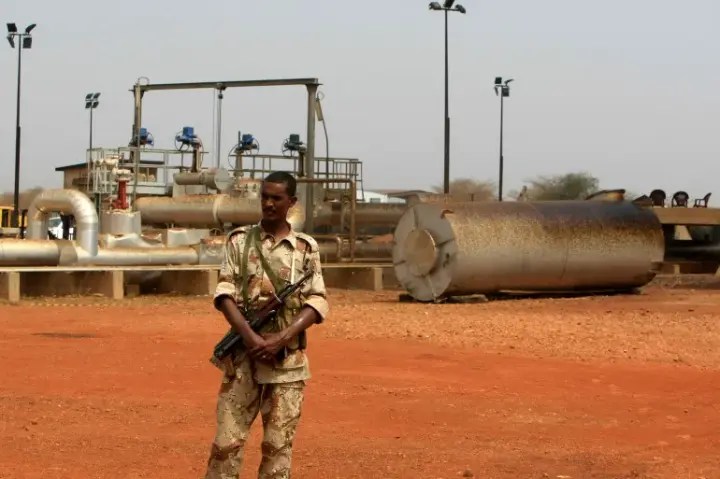
A Sudanese soldier stands guard at Heglig oilfield on May 2, 2012 [Mohamed Nureldin Abdallah/Reuters]
The Aftermath of El Fasher: A Catastrophe on the Scale of Genocide
The RSF's seizure of El Fasher, the capital of North Darfur, in late October 2025, continues to unfold as a humanitarian disaster of staggering proportions, with reports echoing the systematic atrocities of the Darfur conflict two decades ago.
- Who is suffering? The RSF is accused of carrying out mass killings, sexual violence, and targeted attacks against non-Arab ethnic groups. Witnesses and humanitarian teams report indiscriminate killings in the streets and systematic rape against women and girls.
- The Famine: The city's 500-day siege, combined with the collapse of the health and aid systems, has led to famine conditions in parts of Darfur and Kordofan. Children are among the most vulnerable, with an estimated 770,000 children at immediate risk of severe wasting without urgent intervention.
World's Largest Displacement Crisis Deepens
The conflict has fueled the world’s largest displacement crisis, overwhelming host communities and international aid organizations.
- Numbers: More than 9.5 million people are now internally displaced, contributing to a total of nearly 13 million people forced from their homes. Overall, a staggering 33.7 million people, nearly two-thirds of the population, require urgent humanitarian assistance in 2026.
- A Call for Protection: UNICEF Executive Director Catherine Russell, who visited the country this month, highlighted the "unrelenting violence, hunger and fear" facing children, stating that women and girls are "bearing the brunt of the crisis, including horrific levels of sexual violence."
Access Denied: The Obstacle to Aid
The dire humanitarian situation is worsened by severe and sustained access constraints. Both the SAF and RSF continue to obstruct the movement of aid supplies and personnel, particularly to besieged areas in Darfur and Kordofan. Humanitarian operations are on the brink of collapse, with aid convoys facing insecurity, and warehouses running low on critical supplies.
The international community must now reconcile its condemnation with decisive action. The continued flow of foreign weapons, despite repeated calls for a ceasefire, risks entrenching the de facto partition of Sudan and normalizing atrocities on a mass scale.