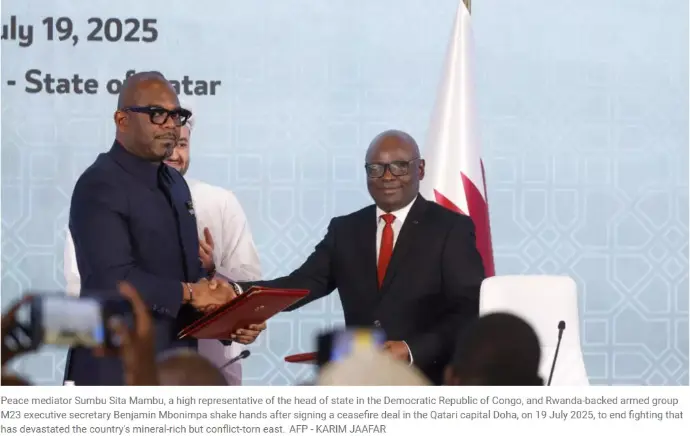
Doha, Qatar - August 2025 - Negotiations between the Democratic Republic of Congo (DRC) and the M23 rebel group collapsed this week, after both sides failed to meet the August 18 deadline for a ceasefire and political agreement in Doha. The setback has reignited fears of renewed violence in eastern Congo, where millions remain displaced.
The Qatari-brokered dialogue, supported by the African Union (AU), had been viewed as a potential breakthrough after years of failed mediation efforts in Nairobi and Luanda. But deep divisions quickly surfaced.
Disagreements centred on three core issues: the release of detained M23 fighters, the rebels’ demand for political recognition, and ongoing control over strategic territory in North Kivu. Kinshasa rejected the group’s conditions, warning that any concession could undermine state authority. M23 representatives, in turn, said reintegration and political participation were essential for lasting peace.
Regional tensions complicate talks
The stalemate comes amid heightened regional friction. Relations between Kinshasa and Nairobi soured this month after Kenya appointed a consul in Goma, a city partly under rebel influence. The DRC government rejected the move, calling it a breach of diplomatic protocol and a potential legitimisation of rebel control.
Kinshasa also continues to accuse Rwanda of supporting M23 - a claim Kigali denies adding further strain to the Great Lakes peace process.
Testing the AU peacekeeping mission
The collapse of the Doha round poses an early test for the AU’s newly deployed peacekeeping force, which officially took over from the United Nations on August 1. Analysts warn that without a binding political settlement, the AU mission may face the same protracted challenges as MONUSCO, the UN force that operated in eastern Congo for over two decades.
Global and humanitarian stakes
Eastern Congo’s instability carries both local and global consequences. The region contains vast cobalt and coltan reserves, essential for electric vehicles and smartphones. Prolonged conflict threatens these supply chains and draws the attention of global powers with strategic interests in the area.
For residents, the stakes are immediate and personal. More than six million people remain displaced, and humanitarian groups warn that renewed clashes could exacerbate already dire conditions.
Despite the missed deadline, AU officials indicate informal consultations will continue in the coming weeks, leaving a narrow window for renewed diplomacy to prevent further escalation.