For decades, the border between the Democratic Republic of Congo (DRC) and Rwanda has been one of the most volatile regions on earth. But recently, a new chapter was written in Washington D.C. one that promises peace but comes with a massive economic "asterisk."
At African Diplomat, we’re breaking down what the Washington Accords mean for the region, the people, and the global race for resources.
The big handshake in DC
Under the patronage of the U.S. government, President Félix Tshisekedi of the DRC and President Paul Kagame of Rwanda recently ratified a landmark peace deal. Presided over by U.S. President Donald Trump, the Washington Accords for Peace and Prosperity aim to end years of cross-border conflict.
The core promises are simple:
Troop Withdrawals: A commitment to pull foreign forces out of Eastern DRC.
Neutralizing Rebels: Ending support for militias like the M23 and the FDLR.
Security Coordination: A new joint mechanism to ensure both sides play by the rules.
But while the headlines focused on the ceasefire, the real "engine" of this deal is buried in the economic fine print.
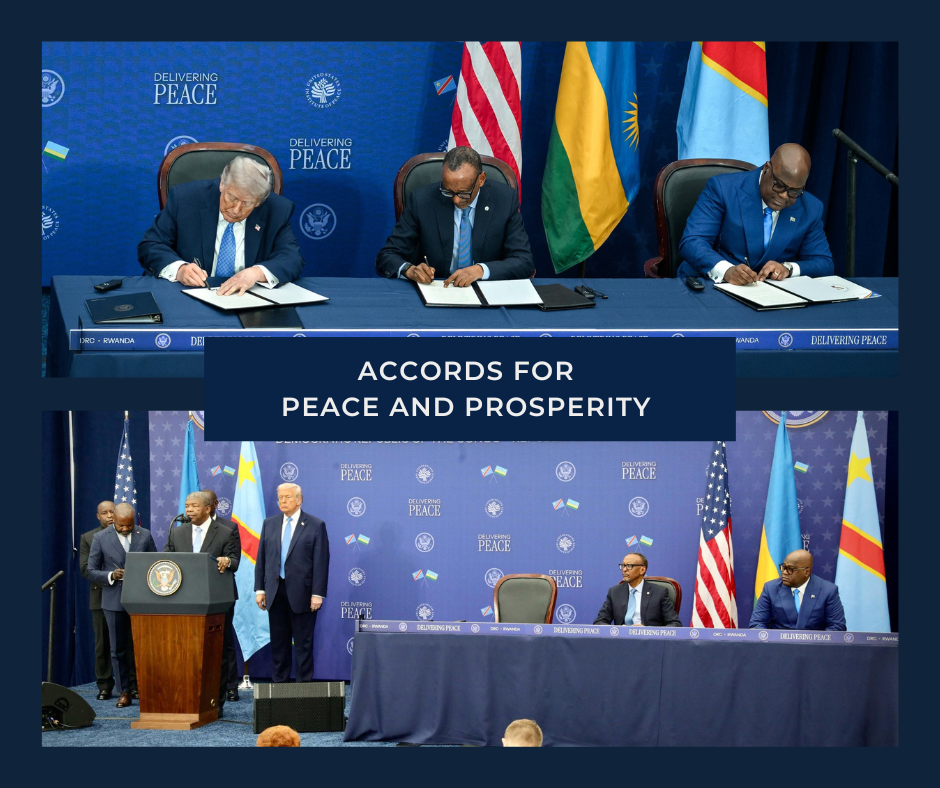
The "Framework for shared economic prosperity"
The Accords aren't just about silencers and borders; they are about cobalt, copper, and lithium. Central to the agreement is the "Framework for Shared Economic Prosperity." This establishes a strategic partnership between the U.S., the DRC, and Rwanda. The goal? To turn the Great Lakes region into a global mining powerhouse.
However, there is a catch that has sparked intense debate: The Right of First Offer.
What is the "Right of First Offer"? Under this deal, the DRC has created a "Strategic Asset Reserve." U.S. companies now have the legal right to be the first in line to bid on these mineral reserves. If a U.S. company makes an offer, the DRC must consider it first. Only if no U.S. deal is reached can the project be offered to other "aligned" allies.
Why the U.S.? Why now?
It’s no secret that Washington is in a sprint to catch up with China, which currently controls a vast majority of the mining assets in the DRC. By brokering this peace deal, the U.S. isn't just acting as a diplomat, it’s securing its own supply chain for the electric vehicle (EV) revolution and national defense.
For the DRC and Rwanda, the trade-off is clear:
1. Security Support: The U.S. provides the muscle and diplomatic pressure to keep the peace.
2. Investment: Billions in U.S. private capital are expected to flow into infrastructure, like the Lobito railway corridor.
3. The Cost: The DRC must implement "constitutional and legislative reforms" within a year to accommodate these new U.S. business rights.
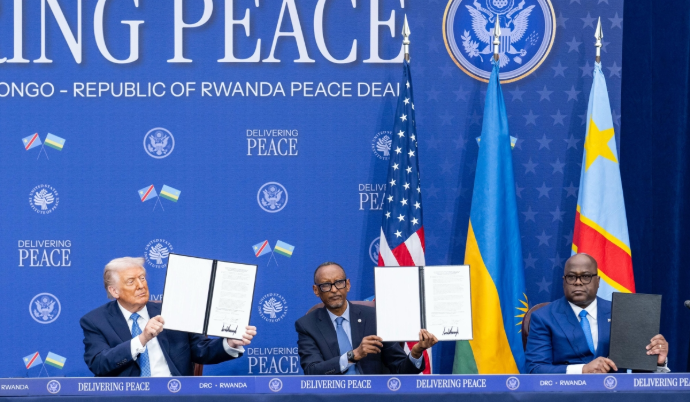
Authentic insight: Is it a fair exchange?
On one hand, the "Washington Accords" could finally bring the stability that families in Goma and Kigali have prayed for. Peace allows for schools to open, trade to flourish, and lives to be rebuilt.
On the other hand, critics worry about sovereignty. If the U.S. holds "first dibs" on the world’s most valuable minerals, does the DRC truly own its future?
We want to hear from you: Is "Peace for Minerals" a pragmatic way to end a forever war, or is it a new form of corporate diplomacy?
Join the Conversation
Do you think this deal will actually stop the fighting on the ground?
Should African nations give "priority access" to Western powers in exchange for security?