At the United Nations General Assembly this week, Liberia’s President Joseph Boakai made a bold declaration that is turning heads across Africa’s diplomatic circles. Speaking about Liberia’s upcoming role as a non-permanent member of the UN Security Council, he said:
“While the nameplate during this two-year term will read ‘Liberia’, the seat, however, belongs to Africa.”
It was a striking statement not just for Liberia, but for the entire continent.
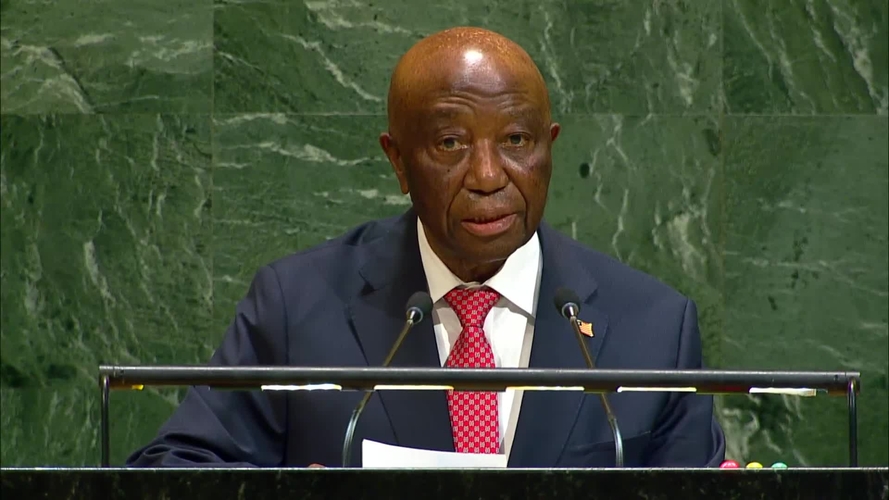
Liberia is one of Africa’s oldest republics, yet it often sits quietly in international affairs, overshadowed by larger economies and regional powers. But Boakai’s speech signals a shift: Liberia wants to use its two-year term (2026–2027) on the Security Council to push Africa’s priorities onto the global agenda.
This is no small ambition. The Security Council remains one of the most powerful bodies in international diplomacy, where decisions on peace, security, and global crises are made. For a smaller state like Liberia, the seat provides a rare opportunity to punch above its weight.
Boakai’s framing, that Liberia’s seat belongs to Africa, reflects a long-standing frustration: Africa is under-represented in the Security Council. Despite being home to 1.4 billion people and the largest bloc in the UN General Assembly, the continent has no permanent seat and often struggles to influence decisions that directly affect it.
By pledging to act as Africa’s voice, Liberia is taking on a continental responsibility. This could mean stronger advocacy on peacekeeping, climate security, and reforms of the UN system itself. It also resonates with Africa’s push for “African solutions to African problems,” a theme often heard in Addis Ababa, the AU’s headquarters.
Of course, the path won’t be smooth. Representing Africa at such a high table comes with expectations, from big powers and from African states themselves. Liberia will need to balance national interests with continental unity, while navigating the competing agendas of the U.S., China, Russia, and Europe.
Still, Boakai’s words have sparked optimism. They remind us that even smaller states can play outsized roles when they align their diplomacy with Africa’s collective ambitions.
Liberia’s “big bet” is more than symbolism. It is a chance to remind the world that Africa demands a stronger voice where global decisions are made. Whether Liberia succeeds or struggles, the boldness of its claim marks a new chapter in Africa’s fight for fair representation on the global stage.