When the city of El-Fasher in North Darfur fell to Sudan’s paramilitary Rapid Support Forces (RSF) in late October, the world’s attention turned once again to a conflict many had stopped following. The aftermath has been devastating mass killings, sexual violence, and the displacement of more than 60,000 people, according to humanitarian monitors and eyewitness reports.
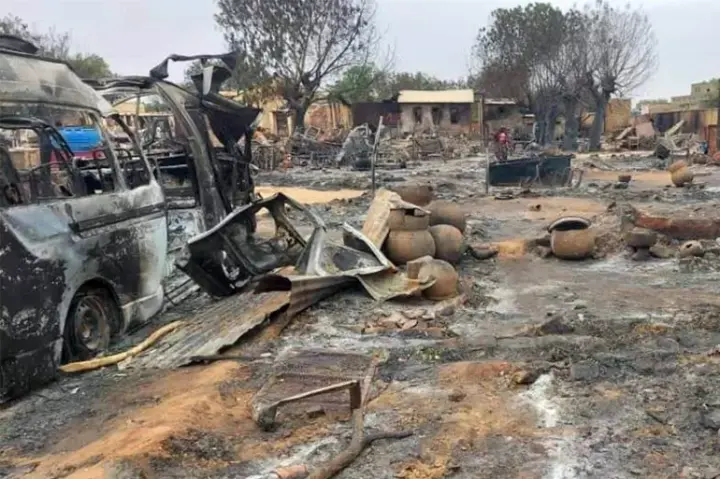
A view of destruction in a livestock market area in al-Fasher, the capital of Sudan's North Darfur state taken on September 1, 2023 .
But beyond the human tragedy lies a growing diplomatic storm. Sudan’s ambassador to Egypt recently accused the RSF of committing war crimes and went a step further implicating the United Arab Emirates in allegedly supporting the paramilitary group. The UAE has denied the accusations, but the claim has sparked an intense debate about foreign influence and accountability in Sudan’s war.
This marks a new phase of the conflict where diplomatic narratives are now as contested as battlefields. The accusations put Gulf–Africa relations under rare scrutiny. For years, Gulf states have been investing heavily in Africa’s ports, agriculture, and infrastructure. But their strategic involvement in regional conflicts is drawing uncomfortable questions about motive and moral responsibility.
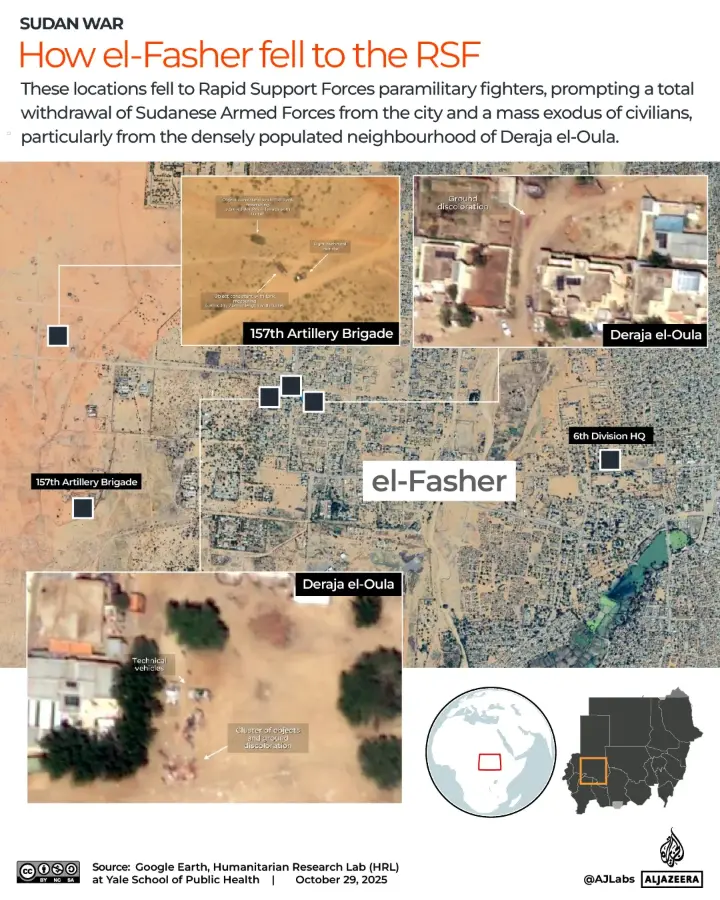
African diplomats are now caught between balancing partnerships and pushing for justice. The African Union, still reeling from criticism for slow mediation, faces renewed pressure to launch an independent inquiry into war crimes in Darfur. Meanwhile, Sudan’s traditional allies from Egypt to Chad, are quietly recalibrating their stances as the regional security map shifts.
Human-rights experts argue that accountability is essential to prevent a repeat of the atrocities that defined Darfur two decades ago.
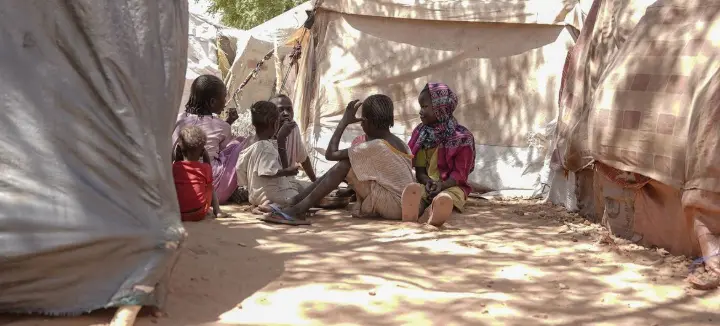 Children shelter in the shade in Tambasi centre in El Fasher, North Darfur.Photo by Mohamed Zakaria /UNICEF
At the same time, ordinary Sudanese civilians displaced from their homes, trapped in makeshift camps, or cut off from aid remain the silent victims of high-level diplomacy. Their plight is a reminder that foreign policy isn’t just about alliances and summits; it’s about lives on the ground.
As the dust settles over El-Fasher, one truth is clear: the battle for Sudan is no longer confined to its borders. It’s a test of how Africa and its partners handle justice, power, and humanity all at once.