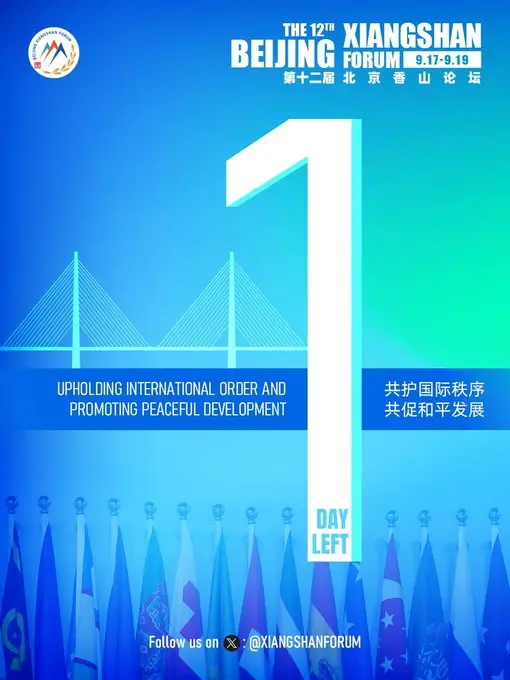
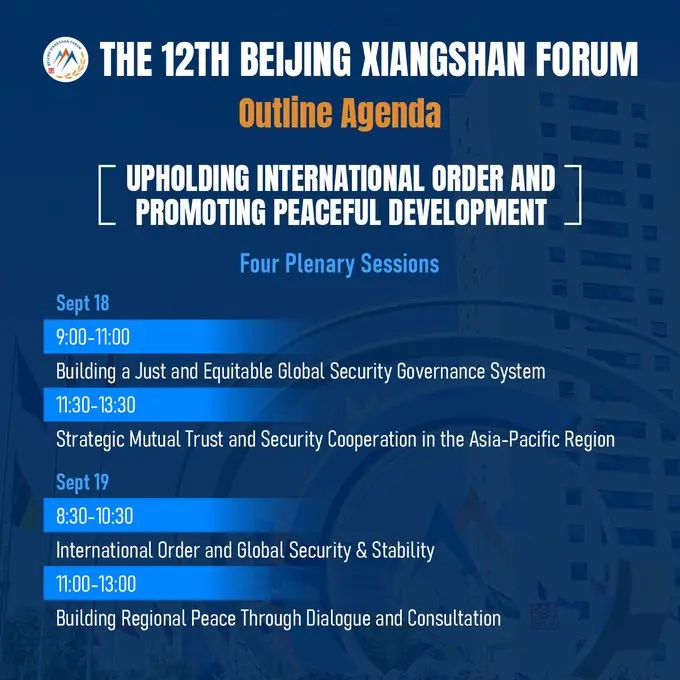
China this week opens the Beijing Xiangshan Forum, one of its biggest annual security and military diplomacy gatherings, at a time when regional and global tensions are on the rise. The forum has attracted representatives from nearly 100 countries, including senior African delegations such as Nigeria’s. It is more than just another international conference, it is a window into Beijing’s worldview, and a stage where Africa’s role in shaping global security narratives will be tested.
The Xiangshan Forum is expected to showcase China’s military modernization, unveiling its latest defense capabilities and emphasizing its opposition to “hegemonism and power politics.” In other words, Beijing is positioning itself as a counterweight to the United States and its allies. Beyond the military hardware and high-level speeches, the event signals how China wants to be perceived globally: as a rising power advocating “shared security” rather than Western dominance.
For African states, participation at the Xiangshan Forum is more than ceremonial. Countries like Nigeria, which have growing defense cooperation with China, are looking for opportunities to strengthen military training, technology transfers, and equipment deals. China has already supplied drones, armored vehicles, and communication systems to several African governments. By showing up in Beijing, African leaders are signaling their openness to diversifying security partnerships beyond traditional Western allies.
But there’s also a balancing act at play. While engaging with China offers access to affordable military hardware and political support, it risks deepening dependency on Beijing. Critics argue that such alignments may compromise Africa’s long-term strategic autonomy. The question remains: are African states merely recipients of China’s vision, or can they use platforms like the Xiangshan Forum to assert their own security priorities?
The stakes are high. Security challenges across Africa, terrorism in the Sahel, piracy in the Gulf of Guinea, instability in the Horn, require sustained international cooperation. By engaging China, African states can gain resources and diplomatic leverage. Yet, they must navigate carefully, ensuring that partnerships serve their citizens rather than external powers.
Africa’s presence at the Xiangshan Forum reflects a broader shift: the continent is no longer a passive actor in global geopolitics. Whether aligning, balancing, or hedging, African leaders are carving out space in the new multipolar order. The key will be maintaining agency deciding not just where to sit at the table, but how to shape the menu.