Sudan’s fragile political landscape has once again been thrust into the international spotlight, this time with Beijing at the centre of the storm. Reports of the Rapid Support Forces (RSF) gaining access to Chinese-made drones have sparked debate about whether China is genuinely adhering to its long-standing non-interventionist foreign policy, or if it is indirectly emboldening one of the actors fuelling Sudan’s internal conflict.
For decades, China has carefully positioned itself in Africa as a development partner, steering clear of overt involvement in local politics. Its ties with the continent have largely revolved around infrastructure, energy, and trade, with Beijing insisting that sovereignty and “African solutions to African problems” must be respected. Yet, Sudan’s ongoing turmoil is testing this doctrine.
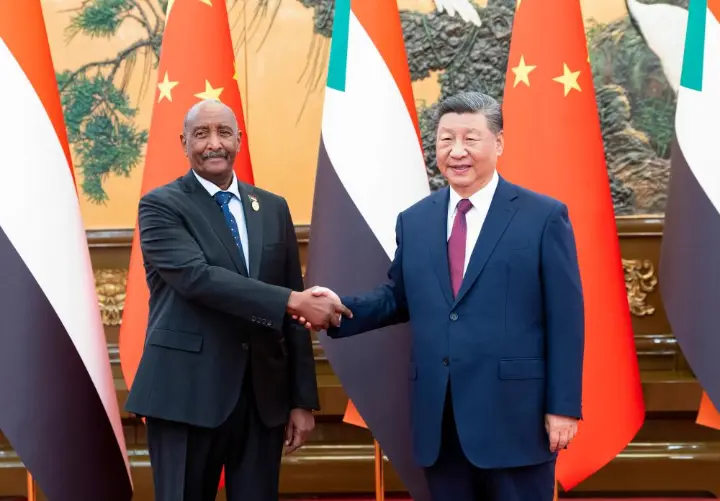
Chinese President Xi Jinping with Chairman of Sudan's Sovereignty Council Abdel Fattah Al-Burhan at the Great Hall of the People in Beijing, capital of China, Sept. 6, 2024. (Xinhua/Ding Lin)
The RSF’s reported access to drones of Chinese origin has raised uncomfortable questions. How were these weapons acquired, and was Beijing fully aware of their end-use? While China denies any direct role in arming Sudanese factions, many in Khartoum and beyond see this as a grey area: plausible deniability on one hand, and quiet complicity on the other.
Across Africa, Beijing’s balancing act is being closely scrutinised. To some, China remains a pragmatic partner, a country that invests without lecturing on governance or democracy. But for others, its silence in moments of deep crisis paints a troubling picture. In Sudan, where civilian lives hang in the balance, neutrality can appear less like peace-making and more like tacit approval.
Regionally, the optics are sensitive. Neighbouring states already jittery about Sudan’s instability view any external support to armed groups as a destabilising factor. Ethiopia, South Sudan, and Egypt, each with their own stakes in the conflict, are watching China’s next moves closely. For African Union mediators, Beijing’s vast influence could either bolster peace efforts or undermine them if perceptions of bias persist.
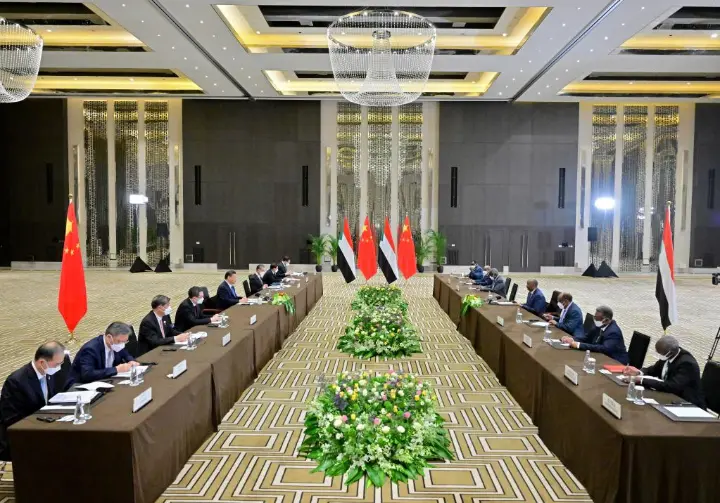
Chinese President Xi Jinping meeting with Chairman of Sudan's Sovereignty Council Abdel Fattah Al-Burhan in Riyadh, Saudi Arabia, Dec. 8, 2022. (Xinhua/Yue Yuewei)
Globally, the implications stretch even further. Western governments, long wary of China’s growing footprint in Africa, are seizing on the Sudan drone debate to question Beijing’s credibility as a neutral partner. If China is seen as enabling paramilitary actors, however indirectly, this could erode its diplomatic capital not just in Sudan, but across conflict-ridden parts of the continent.
Ultimately, China faces a choice. Will it double down on neutrality, risking accusations of silent enabling, or will it take a more proactive stance in supporting peace frameworks in Sudan?
What do you think: Should global powers like China step in more actively to stop Sudan’s slide into chaos or does non-intervention protect African sovereignty? Share your thoughts in the comments below.