In a bold move that signals Africa’s growing role in global affairs, the African Union Commission (AUC) has condemned Israel’s strike on a Hamas delegation in Doha, Qatar. The AUC warned that targeting diplomatic actors not only violates international law but also threatens broader regional stability (Peoples Gazette).
The condemnation came through an official press release issued on 9 September 2025 by the AU Information & Communication Directorate. In the statement, H.E. Mahmoud Ali Youssouf, Chairperson of the African Union Commission, expressed “deep concern” over the reported Israeli strike in Doha, cautioning that the attack risks endangering an already fragile situation in the Middle East.
“The attack risks endangering an already fragile situation in the Middle East. The African Union calls for restraint, respect for sovereignty, and the protection of civilians,” the Chairperson said in the statement.
Youssouf also emphasized Qatar’s longstanding role in peace, mediation, and diplomacy, underscoring the urgent need for renewed dialogue toward a just and lasting peace in the region.
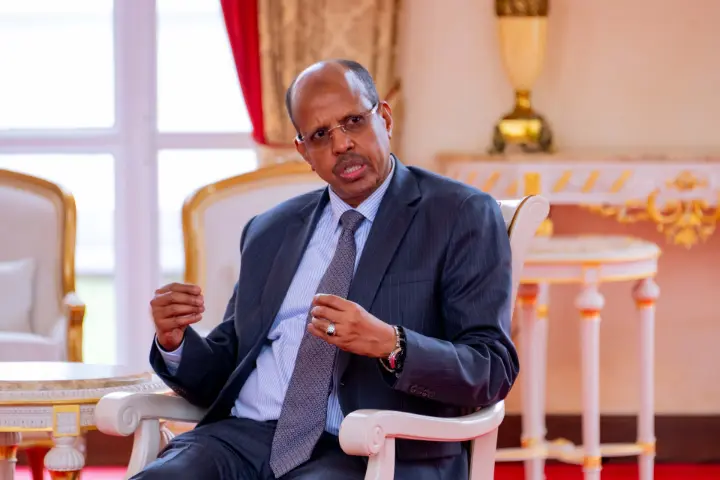
Mahmoud Ali Youssouf, Chairperson of the African Union Commission.
This strong wording is more than a reaction, it marks a shift. Africa’s continental body has often prioritized regional crises, but by speaking out on Middle Eastern conflicts, the AU is asserting itself as a global diplomatic voice.
At the core of the Commission’s message is the defense of diplomatic immunity. Protecting envoys, regardless of their political affiliation, remains a cornerstone of international diplomacy. By framing Israel’s actions as an assault on dialogue itself, the AU is reminding the world that peace cannot be negotiated if diplomacy is under attack (African Union Charter on Democracy, Elections and Governance).
The stance carries deeper meaning for Africa. From independence struggles to today’s fragile peace processes in places like Sudan and the Sahel, African nations understand the cost when negotiation gives way to force. The AU’s rebuke of Israel is both symbolic and rooted in this lived experience: diplomacy is not optional—it is survival.
Flag of African Union
The timing also matters. With the Middle East on edge, the ripple effects of conflict are global, affecting migration, energy, and security dynamics. By stepping into the conversation, Africa is underlining that its own future is intertwined with global peace and stability.
The bigger question now is whether Africa can sustain this momentum. Will the AU take its position further at the UN General Assembly? Can African states leverage this stance within the Non-Aligned Movement to push for broader accountability?
What is clear is this: by condemning Israel’s strike in Qatar, the AU is no longer limiting itself to regional affairs. Africa is stepping confidently into the global diplomacy spotlight, asserting that its voice is not only relevant but essential in shaping the world’s pursuit of peace.