When Africa launched the African Continental Free Trade Area (AfCFTA), the headlines focused on bold promises: creating the world’s largest single market, boosting intra-African trade, and reducing dependence on external partners. Yet, beneath the surface of trade statistics and policy frameworks lies a less glamorous, but arguably more powerful, driver of AfCFTA’s success: diplomacy.
At the recent Africa Development and Investment Forum (AfDiB 2025), Ghana’s Trade Minister underscored this truth: “Harmonised diplomacy is the engine of AfCFTA’s success.” (GhanaWeb) Her words reflect what many trade experts already know—economic integration does not move forward on technical blueprints alone. It thrives when nations choose cooperation over competition, dialogue over division, and consensus over unilateralism.

Minister of Trade, Agribusiness and Industry, Elizabeth Ofosu-Adjare
Behind-the-scenes diplomacy
For AfCFTA to function, member states must align tariffs, harmonise regulations, and negotiate dispute mechanisms. None of this is possible without a layer of quiet, persistent diplomacy. Behind closed doors, trade envoys and diplomats work through sensitive issues, ranging from rules of origin to cross-border customs harmonisation.
Take, for instance, the ongoing discussions in West Africa over agricultural exports. Farmers in Ghana and Côte d’Ivoire want open markets to sell their produce across borders, but governments must balance this with protecting local industries. Diplomacy here is not only about tariffs, it’s about sovereignty, food security, and livelihoods. These tough conversations, often invisible to the public, keep AfCFTA’s economic machinery running.
Trade, peace, and security: Interlinked
Trade diplomacy also intersects with broader peace and security. In regions such as the Sahel and the Horn of Africa, instability threatens supply chains and discourages investment. Neighboring states that support peace talks and counterterrorism efforts are indirectly protecting AfCFTA’s future. Without stability, no free trade agreement can achieve its promise. Diplomats, therefore, find themselves negotiating not just trade rules, but the very conditions that make commerce possible.
Why harmonised diplomacy matters
Harmonisation means more than technical alignment, it is a mindset. It reflects Africa’s willingness to see itself as a collective actor in the global economy rather than a patchwork of individual markets. This unity strengthens Africa’s bargaining power with external partners like the EU, China, and the U.S. As scholars note, AfCFTA could lift 30 million Africans out of extreme poverty if fully implemented (World Bank).
For a young entrepreneur in Nairobi or a small farmer in Accra, that bargaining power translates into more opportunities, wider markets, and greater resilience.
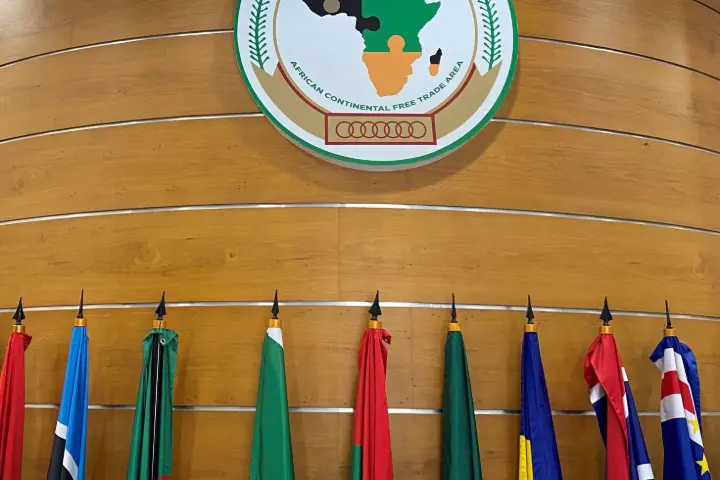
The AfCFTA story is still unfolding, and its ultimate impact will depend on how effectively African states nurture this diplomatic backbone. Harmonised diplomacy may never dominate headlines, but it is the quiet force stitching Africa’s economic future together.
As Ghana’s Trade Minister reminded us, AfCFTA’s success rests not only on policies drafted in boardrooms but also on the patient, tireless negotiations happening in diplomatic corridors. For Africa’s vision of integration to become reality, this behind-the-scenes diplomacy must continue to thrive.
Now is the time for African leaders, civil society, and young people to champion AfCFTA, not as a distant policy, but as a living project that shapes jobs, trade, and peace across the continent.