The African Union (AU) has issued a rare and urgent call for action as Mali sinks deeper into crisis. The insurgent group Jama’at Nusrat al-Islam wal-Muslimin (JNIM) has reportedly blocked fuel supplies, attacked transport convoys, and crippled daily life in major parts of the country. Businesses have shut down, schools have closed, and communities are running out of essential supplies.
This latest escalation underscores how fragile Mali’s security landscape has become since the withdrawal of UN peacekeepers and the regional cooling of ECOWAS relations. But beyond Mali’s borders, this crisis carries a bigger question: Can the AU lead a truly African-led response to a continental problem?
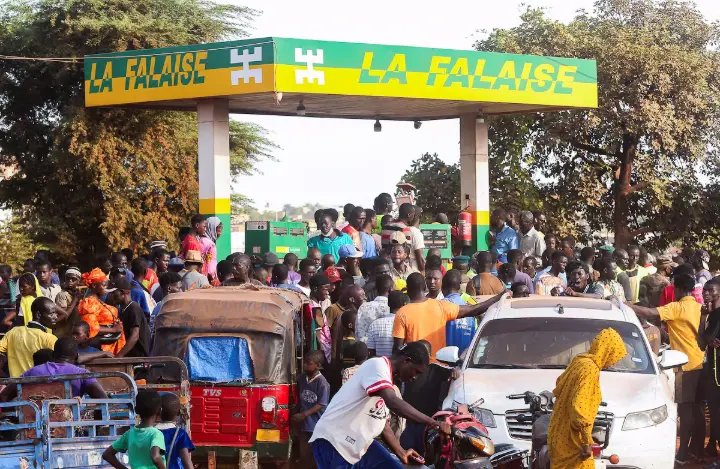
People gather at a petrol station amid ongoing fuel shortages caused by a blockade imposed by al Qaeda-linked insurgents in early September, in Bamako, Mali, November 1, 2025.
For decades, African peace efforts have often leaned heavily on external partners from European funding to UN operations. But this moment feels different. The AU’s statement signals a growing awareness that the continent must take ownership of its own security agenda. It’s not just about boots on the ground; it’s about coordination, intelligence-sharing, and a unified diplomatic front that prioritizes African agency.
If the AU manages to rally regional bodies like ECOWAS, or even work with local actors in the Sahel, it could mark a shift in how African diplomacy is perceived. It would demonstrate a transition from reactive peacekeeping to proactive, self-driven diplomacy where Africa defines its own security solutions rather than waiting for them to be prescribed.
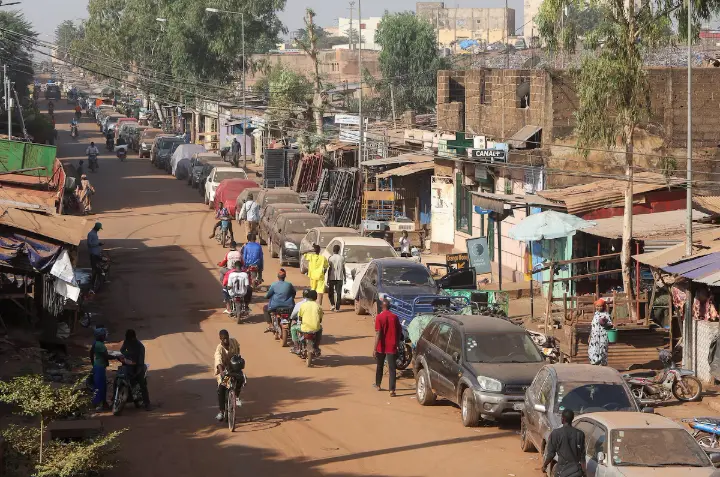
A cyclist and motorcyclists pass by cars parked on the roadside, amid ongoing fuel shortages caused by a blockade imposed by al Qaeda-linked insurgents in early September, in Bamako, Mali, October 31, 2025
Still, challenges remain steep. Mali’s military junta has strained relations with several of its neighbors and distanced itself from traditional Western partners, turning instead to new alliances. That creates a complex diplomatic puzzle for the AU, which must balance engagement without legitimizing authoritarianism.
Yet, the significance of this moment can’t be ignored. The fuel blockade is more than a logistical nightmare it’s a test of Africa’s unity, resilience, and ability to protect its people when state systems falter.
Whether the AU can rise to that test will define not just Mali’s future, but the credibility of Africa’s collective diplomacy in the years ahead.