West Africa is once again at the crossroads of fragile peace and looming instability. Analysts warn that the region’s so-called “coup belt”, stretching across Mali, Niger, and Burkina Faso, risks becoming a silent powder keg. Coups, weak governance, and the rapid rise of extremist groups are converging to create a dangerous cocktail, one that could spill far beyond national borders if left unchecked.
Over the past five years, military takeovers have destabilised political systems already under immense pressure. Civilian governments, accused of corruption and failure to provide security, have fallen one after another. In their place, juntas promised order but delivered more uncertainty. Into this vacuum, extremist groups linked to al-Qaeda and ISIS have expanded their foothold, terrorising communities and exploiting porous borders (Modern Diplomacy).
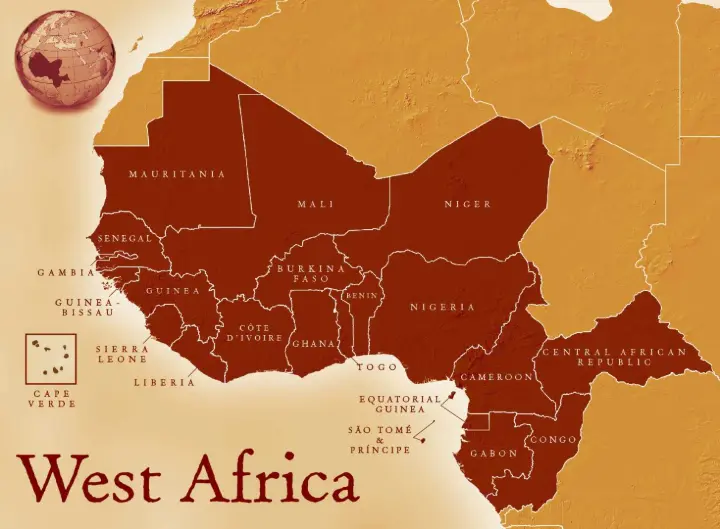
Yet what is most alarming is not just the instability within these countries, but the silence surrounding it. Global attention has shifted elsewhere, to climate negotiations, the war in Ukraine, and economic rivalries in Asia. As the spotlight fades, ordinary people in West Africa are left with shrinking humanitarian aid, vanishing international support, and mounting insecurity.
The diplomatic question now is: who will step in, and how?
ECOWAS and AU on the Spot
ECOWAS (the Economic Community of West African States) has historically played the role of regional stabiliser. But in recent years, its credibility has been strained. Sanctions on juntas have not restored democratic order, and the bloc itself has faced internal divisions, with some member states openly resisting its authority.
The African Union (AU) has also called for dialogue and democratic transition, but its interventions have often been more symbolic than decisive. Still, hope remains. Regional diplomacy could pivot towards inclusive dialogue, bringing together military rulers, opposition figures, civil society, and religious leaders. Such a framework would not legitimise coups but could open pathways to stability, especially if coupled with strong guarantees on elections and governance reforms.
At the same time, international partners, particularly the EU and UN, must not retreat. Their role in humanitarian support and counter-terrorism coordination remains vital.
Why It Matters Now
The risk of inaction is clear: conflict could spill into coastal states like Ghana, Togo, and Benin, creating a new arc of instability. Humanitarian crises, from mass displacement to chronic food insecurity, could spiral, forcing the world to pay attention only after the damage is done.
West Africa’s “silent powder keg” is not a distant problem. It is a global challenge that calls for timely diplomacy, genuine dialogue, and renewed solidarity. Ignoring it is not an option, because when the silence breaks, it may already be too late.