On 17 September 2025, the United States’ Millennium Challenge Corporation (MCC) officially marked the successful completion of its $536 million compact with Côte d’Ivoire. The programme, launched in 2017, focused on modernising transport corridors and strengthening workforce development. But the story didn’t end there. Alongside celebrating results, MCC announced the signing of a new regional energy compact, setting the stage for a greener and more interconnected West Africa.
Building foundations: Roads and skills
The just-concluded compact was not simply about building roads. It was about connecting people and opportunities. Key achievements include the rehabilitation of critical transport networks in Abidjan, reducing travel time for businesses and commuters. This improved logistics for exporters, cut costs for importers, and gave everyday Ivorians easier access to markets and services.
Equally important was the investment in education and workforce development. By upgrading technical and vocational schools, the compact helped prepare thousands of young people for jobs in industries like logistics, construction, and ICT. In a country where over 60% of the population is under 25, this investment directly supports Côte d’Ivoire’s push to harness its demographic dividend.
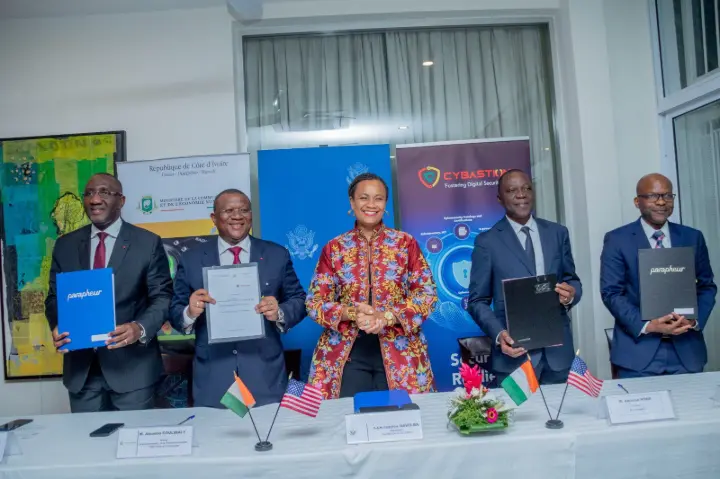
Ambassador Davis Ba’s remarks on the signing of Memoranda of Understanding between Cybastion and the government of Côte d’Ivoire in 2023, Cocody, Abidjan.
Enter the energy compact: A regional vision
With transport and workforce development foundations in place, MCC’s new focus is on regional energy cooperation. The fresh compact aims to expand access to affordable, reliable, and clean energy, vital for driving industrialisation and reducing energy poverty. For West Africa, where millions still lack electricity, this is transformative.
Strategically, the compact aligns with U.S. goals of supporting climate-smart growth and reducing reliance on fossil fuels. By promoting renewable energy and strengthening cross-border power trade, the initiative also fosters regional integration. Côte d’Ivoire, already a power exporter in West Africa, stands to deepen its role as an energy hub.
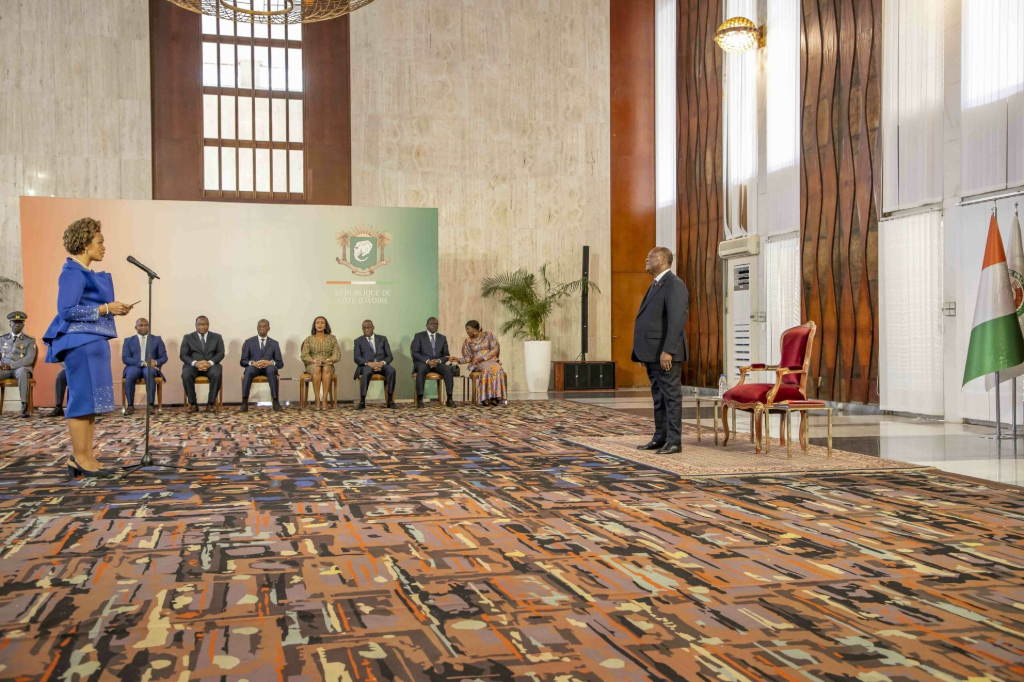
United States Ambassador to Côte d’Ivoire Jessica Davis Ba
Why it matters
This transition, from roads and classrooms to renewable grids, shows the evolution of U.S. engagement in Africa. It reflects a broader diplomatic strategy: supporting infrastructure that connects, educates, and powers people.
For Côte d’Ivoire, the benefits are clear: better trade routes, a more skilled workforce, and the promise of affordable electricity to fuel future growth. For the region, the energy compact could unlock new levels of economic cooperation, energy security, and resilience to climate change.
In many ways, the story of Côte d’Ivoire and MCC is the story of Africa’s future: one where development is not just about aid, but about partnerships that build capacity, sustainability, and opportunity across borders.
Sources: