In a bold statement during the Non-Aligned Movement (NAM) meeting held this week in Kampala, President Yoweri Museveni called on European countries to step up their economic engagement with Africa. Speaking before delegates from across the globe, the Ugandan leader said it was time for Europe to see Africa not just as an aid recipient, but as a partner in trade, innovation, and sustainable growth.
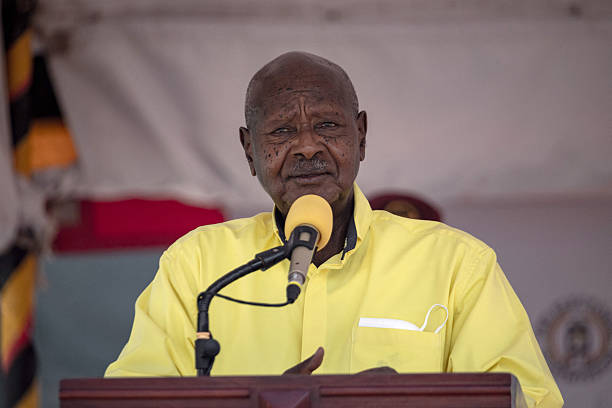
Museveni reminded Europe of the continent’s shared history and geographical proximity, arguing that these factors should make Africa a natural partner in global development. “Africa and Europe are neighbours,” he said. “It makes more sense for Europe to invest here in industries, energy, agriculture, and digital technology than to continue treating Africa as a charity case.”
According to Nile Post News, Museveni emphasized that Africa has the resources, workforce, and ambition to rise but needs fair partnerships and access to markets to make that happen. He challenged Western nations to rethink policies that limit African exports, restrict technology transfer, and impose heavy trade barriers.
“The era of dependency must end,” Museveni said. “Africa doesn’t need sympathy. It needs smart investments, fair trade, and mutual respect.”
A Renewed Vision for Africa-Europe Relations
Museveni’s message comes at a time when Africa’s diplomatic landscape is shifting. Countries like China, India, and Turkey have rapidly expanded economic ties with African states through infrastructure projects, trade, and technology exchange. Meanwhile, Europe risks losing its long-standing influence on the continent.
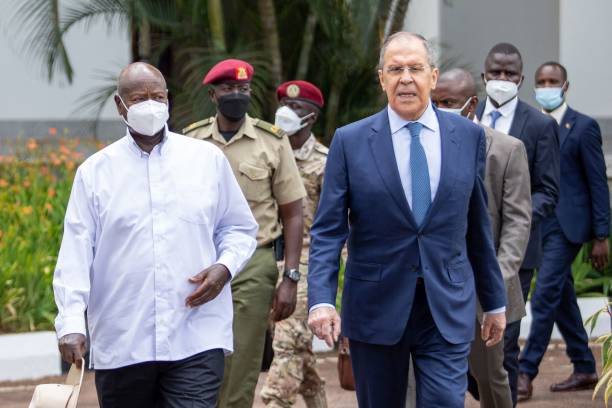
Ugandan President Yoweri Museveni (L) walks with Russian Foreign Minister Sergei Lavrov (R) at the State House in Entebbe, Uganda, on July 26, 2022. (Photo by BADRU KATUMBA/AFP via Getty Images)
Experts argue that Museveni’s remarks reflect a growing pan-African diplomatic confidence, a call for fairer partnerships, less paternalism, and more shared prosperity. Uganda, like many African countries, is pushing for value addition on local products rather than exporting raw materials.
If Europe heeds this call, the relationship could move beyond aid packages to mutually beneficial trade, clean energy cooperation, and investments in Africa’s growing digital economy.
Africa’s population is set to double by 2050, making it one of the fastest-growing consumer and labour markets in the world. For Europe, deeper engagement isn’t just about goodwill, it’s a strategic economic opportunity.
Museveni’s challenge to Europe is clear: stop talking about Africa’s potential and start investing in it.