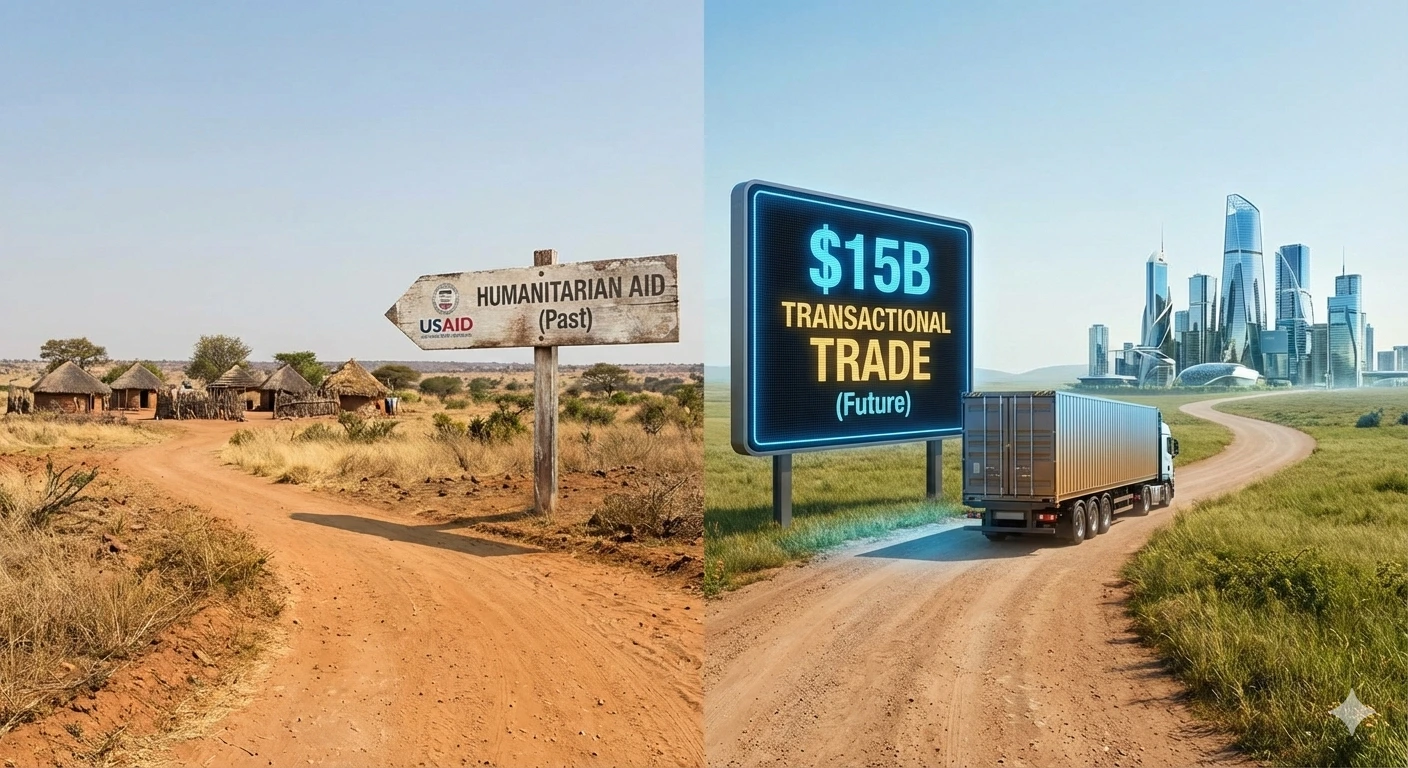
For decades, the letters USAID were synonymous with American influence across Africa. But as of January 2026, the era of "soft power" development aid is officially over. Following the dramatic dismantling of the agency last year, the United States has traded its traditional humanitarian playbook for a lean, transactional business model.
At African Diplomat, we’re breaking down the numbers and the "nerves" behind this massive shift. It’s a $15 billion gamble that changes everything from how your local clinic gets funded to which cars South Africa can export.
1. From USAID to "data for dollars"
The closure of USAID has left a $30 billion hole in global development. In its place, the U.S. has launched a $15 Billion Transactional Framework. This isn't charity; it's a co-investment.
The new "America First" MOUs (Memorandums of Understanding) focus heavily on health and commercial data. Under these 5-year pacts (2026–2030), countries like Kenya and Nigeria are receiving billions in funding, but there's a catch: high-level health data sharing and "right of first offer" for American tech firms.
2. AGOA’s three-year lifeline
There was a sigh of relief in boardrooms across the continent last week as the U.S. House of Representatives passed the AGOA Extension Act (H.R. 6500). This grants a three-year extension to the African Growth and Opportunity Act, allowing duty-free access to the U.S. market through 2028.
While the extension provides stability, the "three-year" window is shorter than the decade-long renewals Africa hoped for. It’s a "bridge" to a future where trade is entirely bilateral and reciprocal.
3. The South Africa "Review": A warning shot
While most of Africa celebrates the AGOA extension, South Africa is sitting in the "hot seat." Its eligibility is currently under formal review by Washington.
Why the tension?
Naval drills: Joint exercises with Russia, China, and Iran (the "Will for Peace" drills) have infuriated U.S. lawmakers.
Geopolitical ties: Increasing alignment with BRICS+ adversaries has led some in the U.S. Senate to label the ANC-led government an "adversary."
The tariff threat: President Trump has signaled a potential 25% blanket tariff on nations "doing business with Iran," which could devastate South Africa’s citrus and automotive sectors.
4. What this means for african sovereignty
Here we see a clear trend: Washington is no longer asking for "democratic reforms" in exchange for aid. Instead, it’s asking for geopolitical alignment and market access.
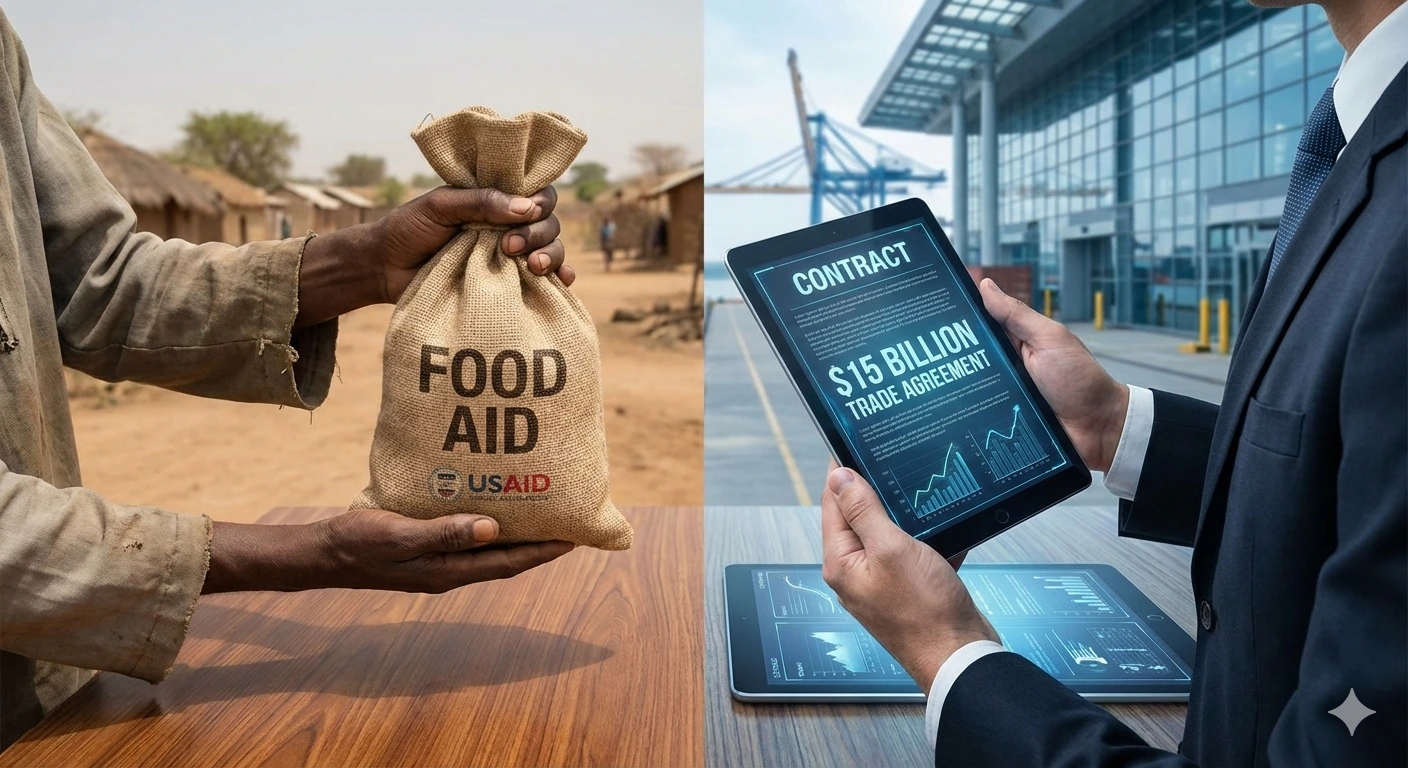
For African leaders, this is a moment of extreme agency. You can take the U.S. billions, but you must be prepared to open your data vaults and pick a side in the global "Cold War 2.0."
We want to hear from you:
Is "Transactional Aid" better for Africa than the old USAID model?
Should South Africa prioritize its ties with Russia/China, or its duty-free access to the U.S. market?