When former U.S. President Donald Trump publicly threatened military intervention in Nigeria, it sent shockwaves through diplomatic circles. His remarks, alleging “mass Christian killings” in the country, drew outrage across Africa and a swift, strategic response from Abuja.
In a statement that struck both firm and measured tones, Nigeria’s Foreign Minister Yusuf Tuggar dismissed Trump’s remarks as “reckless and uninformed.” The government emphasised that Nigeria remains committed to protecting all its citizens, regardless of religion, and that its sovereignty “is not up for negotiation.”
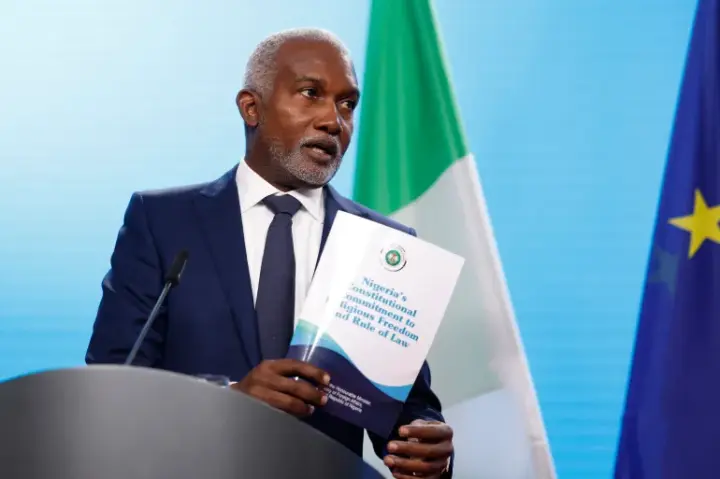
Nigerian Foreign Minister Yusuf Tuggar
Behind the scenes, Nigerian diplomats have been busy. Sources say Abuja has launched quiet outreach to Washington’s policy circles, aiming to de-escalate tensions and remind U.S. leaders of the country’s central role in regional stability and counter-terrorism. Nigeria, after all, is not just any state, it’s Africa’s largest democracy and a vital U.S. security partner in the fight against extremism.
Yet this crisis exposes a larger problem in how Africa’s stories are told and misunderstood abroad. Western narratives often flatten complex local issues into one- sided moral crises. For many African diplomats, the Trump threat feels like déjà vu: a reminder of how easily power politics and religious rhetoric can override facts.
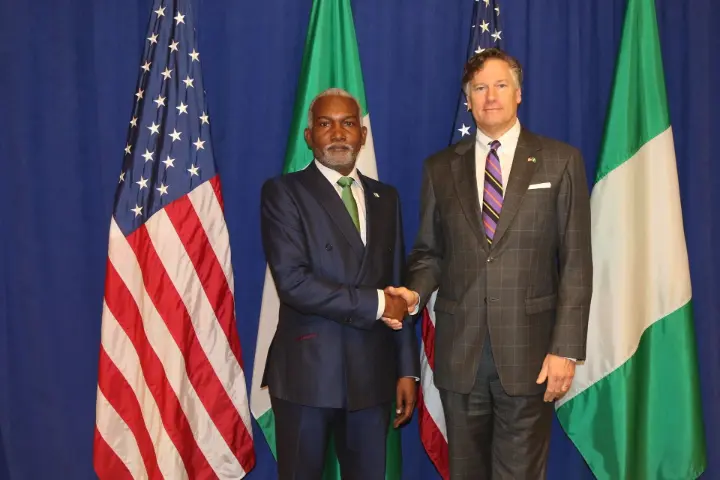
Nigerian Foreign Minister Yusuf Tuggar with Deputy Secretary of State Christopher Landau
Experts say this episode could redefine Nigeria-U.S. relations for years to come. “This is not just about diplomacy; it’s about dignity,” notes one Lagos-based analyst. “How Nigeria responds will shape how the world engages with African sovereignty going forward.”
From a continental lens, the moment underscores Africa’s ongoing challenge to assert its voice in international affairs and push back against external interventions, whether military, political, or ideological. The continent’s diplomats increasingly face a balancing act: engaging global powers without surrendering autonomy.
For now, Abuja’s message is clear: Nigeria welcomes dialogue, not dictates. As Africa’s geopolitical weight grows, this confrontation could mark a turning point in how the continent defends its sovereignty in the face of foreign pressure.