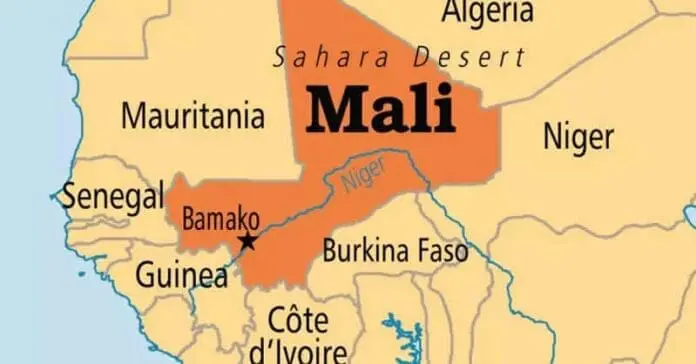
Mali has fired back at the United States with a bold move that’s making waves across Africa’s diplomatic circles. In a reciprocal visa policy, the Malian government announced it will now require American travellers to deposit between $5,000 and $10,000 before entering the country, a direct response to Washington’s new bond requirements for Malian visitors to the U.S.
According to Al Jazeera, Bamako called the policy a “matter of principle and sovereignty,” saying Mali would not remain silent in the face of what it views as unfair and discriminatory travel measures.

What’s behind the visa bond spat?
Earlier this year, the U.S. introduced a pilot policy requiring certain travellers from African countries including Mali, Eritrea, and Sierra Leone, to pay hefty visa bonds ranging from $5,000 to $15,000 as a condition for entry. The policy was meant to discourage visa overstays.
Mali, already on edge due to tense relations with Western powers, saw this as an affront. Officials described the U.S. decision as “an act of disrespect” toward African nations. In response, the Malian Ministry of Foreign Affairs announced the new measure to “ensure equal treatment and mutual respect in international mobility.”
A new era of “reciprocal diplomacy”?
This tit-for-tat move signals a new diplomatic posture emerging across Africa, one that is assertive, unapologetic, and rooted in reciprocity. Analysts say Mali’s action is part of a wider trend among countries seeking to redefine their relationships with global powers, demanding mutual respect in policy and practice.
While some see the move as bold and necessary, others worry it could hurt Mali’s tourism and investment prospects. Still, the message is clear: African countries are increasingly willing to push back, even against major powers.
This “visa bond diplomacy” could reshape how African nations negotiate mobility, sovereignty, and mutual respect in global relations.