When Egypt’s Prime Minister Mostafa Madbouly stood before delegates at the SCO Plus Summit in Tianjin on 1 September 2025, his message was clear: Egypt fully supports China’s Global Development Initiative (GDI). Beyond symbolic diplomacy, this move reflects a deeper shift,Africa’s increasing alignment with Beijing’s vision for global development. (Modern Diplomacy)
Soft power, unlike hard military might, thrives on influence winning trust, shaping narratives, and creating long-term partnerships. In Africa, China has mastered this art through offering development financing, technology transfer, and infrastructure at speed, Beijing has positioned itself as Africa’s largest trading partner, with bilateral trade surpassing $282 billion in 2024.
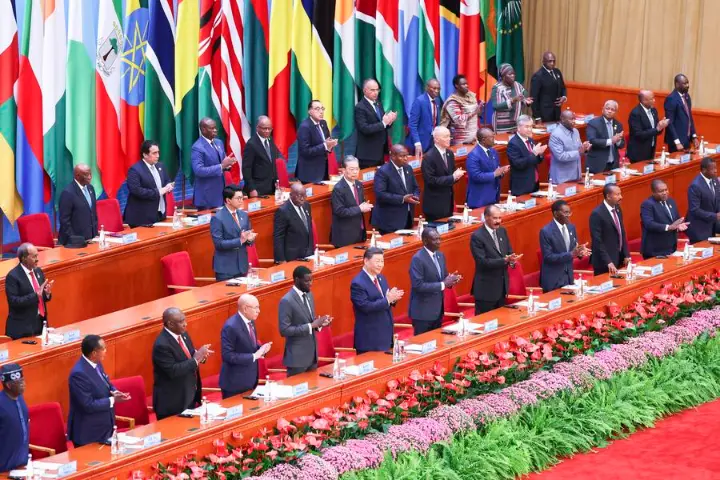
BEIJING, Sept. 5, 2024 (Xinhua) -- Chinese President Xi Jinping attends the opening ceremony of the 2024 Summit of the Forum on China-Africa Cooperation (FOCAC) and delivers a keynote speech at the Great Hall of the People in Beijing, capital of China, Sept. 5, 2024. (Xinhua/Liu Bin)
Take Egypt. As a regional powerhouse, Cairo’s embrace of the GDI aligns its national priorities, industrialisation, digital transformation, and green development, with Beijing’s global ambitions. This partnership is not just about roads and railways; it is about positioning Egypt within a multipolar world where China increasingly sets the pace.
Meanwhile, Africa’s energy landscape shows how China’s soft power radiates indirectly. QatarEnergy’s expansion into South Africa, Namibia, and Algeria underscores the region’s attractiveness to global players. While Qatar is not China, its growing presence complements Beijing’s long-term goal of securing reliable energy networks across Africa. These investments strengthen a broader ecosystem of partnerships in which China remains central. (Ainvest)
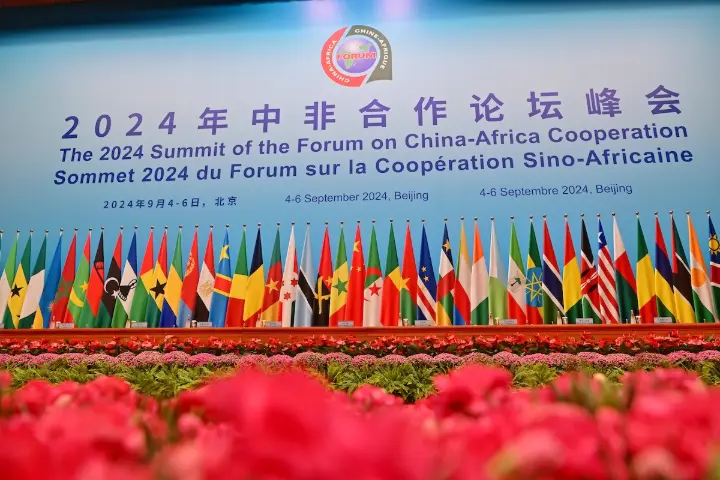
BEIJING, CHINA - SEPTEMBER 05: The Chinese national flag (C) and national flags of African countries are seen on the table at the Great Hall of the People during the 2024 Summit of the Forum on China-Africa Cooperation on September 5, 2024 in Beijing, China. (Photo by VCG/VCG via REUTERS)
Critics argue that China’s charm offensive masks dependency—whether through large-scale loans or control over strategic resources. Yet African governments see tangible results: modern rail lines, power plants, digital networks, and financing that Western partners often delay with political conditions. For policymakers in Cairo, Lagos, or Addis Ababa, China’s “delivery diplomacy” often outweighs the risks.
Still, African leaders are pragmatic. Egypt’s alignment with Beijing does not mean cutting ties with Washington or Brussels; it reflects diversification. For Qatar, it means leveraging Africa’s markets while acknowledging China’s role in shaping tomorrow’s energy order.
Why it matters for Africa
For African citizens, whether entrepreneurs in Nairobi, students in Cairo, or energy workers in Luanda, the real question is not who exerts influence, but who delivers opportunities. China’s expanding soft power will continue to define investment, jobs, and regional integration in the years ahead. The challenge for African states is clear: leverage Beijing’s engagement without sacrificing sovereignty.
As long as China remains a reliable partner for infrastructure, energy, and development, its soft power in Africa will keep growing. What happens next will depend not only on Beijing’s strategies but also on how African leaders and societies choose to shape these partnerships.