On September 17, 2025, news broke that the U.S. House of Representatives is considering a new bill that could mark a major shift in Washington’s relationship with Africa. The proposed legislation calls for more active promotion of trade and investment with African countries, specifically naming Zimbabwe as one of its focus points.
For decades, U.S.–Africa relations have been largely defined by aid, security cooperation, and occasional sanctions. Trade and investment, though discussed at high-level summits, have often lagged behind. This bill could change that by pushing Washington to treat Africa not only as a partner in humanitarian terms but as a critical economic and geopolitical player.
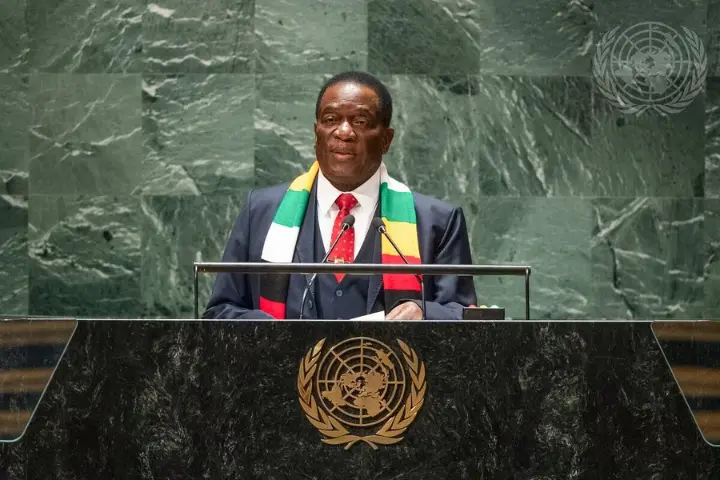
Zimbabwe president, Emmerson Mnangagwa.
The timing is telling. China remains Africa’s largest trading partner, pouring billions into infrastructure, mining, and technology. Russia has strengthened ties through energy deals and security arrangements. For the U.S., this bill represents a chance to reset its strategy, shifting from reactive diplomacy to proactive engagement. Including Zimbabwe in the text is particularly significant, given Washington’s historically frosty ties with Harare due to sanctions and governance concerns. It signals an openness to a fresh chapter.
If passed, the bill could pave the way for:
- Expanded U.S. investment in African energy, technology, and agriculture.
- Increased market access for African goods, potentially easing trade barriers.
- Renewed dialogue with governments long at odds with Washington, including Zimbabwe.
Such steps could not only unlock economic opportunities but also strengthen U.S. influence in a region where strategic competition is intensifying.
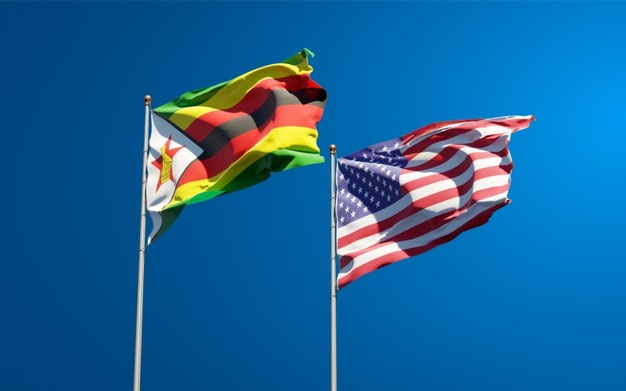
Reactions across Africa are cautiously optimistic. Leaders and business communities see this as an overdue recognition of Africa’s potential beyond being an aid recipient. However, some remain skeptical. Will the bill lead to real policy shifts, or will it stall in Washington’s gridlock? Will promises of investment be backed by concrete action, or will Africa remain on the periphery of U.S. foreign policy?
Passing any bill through the U.S. Congress is no small feat, especially in a polarized political environment. But even the discussion itself reflects changing attitudes: Africa is no longer an afterthought but a battleground of ideas, trade, and influence.
For Zimbabwe and the wider continent, this could mark the beginning of a new era in U.S. - Africa relations, one where partnership replaces paternalism, and investment speaks louder than aid.
Source: Nehanda Radio