In a fast-changing world, Ethiopia is quietly redrawing its diplomatic map. Recent developments reveal that Addis Ababa is deepening its relationship with Moscow not through military pacts or political symbolism, but through trade and technology.
According to a report by Africa Sustainability Matters, Ethiopia’s talks with Russia on nuclear energy development come as the country intensifies its bid to join the World Trade Organization (WTO). These two seemingly separate ambitions are, in fact, deeply connected. Together, they reflect Ethiopia’s evolving diplomacy: a strategy that prioritises economic diversification and energy independence over traditional donor-driven ties.
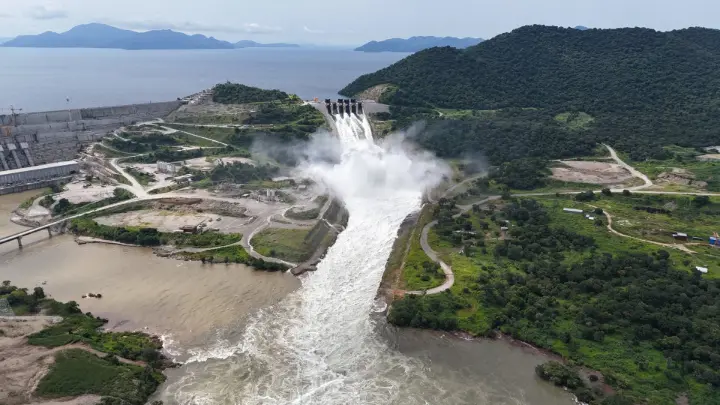
An aerial of Africa’s largest hydropower facility, Ethiopia’s newly inaugurated GERD
For years, Ethiopia’s global relations were defined by aid partnerships with Western allies. But as the world grows more multipolar, Africa’s second most populous nation is opting for pragmatic partnerships. Russia, seeking to expand its influence across the continent, has become a key ally in this shift. The collaboration on nuclear technology, spearheaded by Russia’s state energy agency Rosatom, aims to help Ethiopia harness peaceful nuclear power for electricity and medical research.
This move is more than just about energy; it’s about positioning. By investing in nuclear energy, Ethiopia is signalling that it wants to compete at the same table as emerging economies, not remain dependent on imported fuel or donor funding.
At the same time, the WTO bid represents a push to open its markets and attract global investors. Membership would integrate Ethiopia into the global trade system and boost investor confidence, critical for a country recovering from internal conflict and economic slowdown.
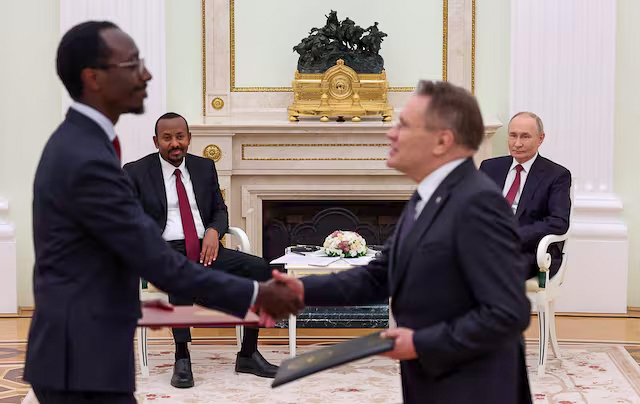
Russia's President Vladimir Putin and Ethiopia’s Prime Minister Abiy Ahmed watch Director General of Russia's State Atomic Energy Corporation Rosatom Alexei Likhachev and Ethiopia’s Foreign Minister Gedion Timothewos exchanging documents during a meeting in Moscow, Russia, September 25, 2025.
From a diplomatic standpoint, Ethiopia’s actions reveal how African nations are broadening their foreign policy playbooks. No longer limited to Western or Chinese partnerships, countries like Ethiopia are exploring new relationships with Russia, India, and Gulf states where the focus is on skills, trade, and energy.
In essence, Ethiopia’s nuclear and trade pursuits tell a larger story: Africa’s diplomacy is no longer reactive. It’s strategic, diversified, and increasingly guided by national interests.
As Ethiopia’s reactor plans heat up, one question remains will this partnership light up more than just power grids? It could redefine how African diplomacy is done in the 21st century.