Trade is no longer just about goods crossing borders. It has become a weapon, a bargaining chip, and a battlefield of global power. This week, South Africa found itself right at the center of that storm.
At a high-level trade promotion conference, South Africa and China pledged to expand cooperation in mining, energy, and infrastructure. Chinese firms announced plans to localize operations in South Africa and channel more money into the country’s clean energy transition. For a nation struggling with rolling blackouts and the urgent need for greener solutions, that promise is both timely and strategic.
But even as Pretoria celebrated stronger ties with Beijing, tensions with Washington took center stage. President Cyril Ramaphosa publicly accused the United States of “weaponizing trade” after Washington increased tariffs on South African exports. He also called for restoring tariff relief under the African Growth and Opportunity Act (AGOA), a U.S. program that has long helped African economies access American markets.
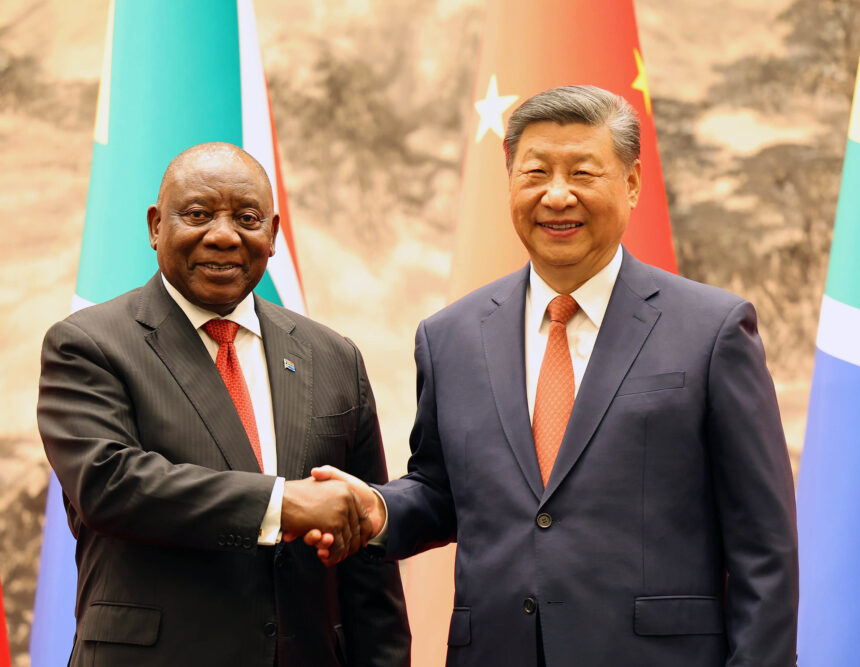
This diplomatic dance is more than just about South Africa. It reflects a bigger trend: Africa is now a frontline in the rivalry between the U.S. and China. Both powers see the continent as a critical space for resources, influence, and new markets.
China offers massive investment and infrastructure projects with fewer political conditions. The U.S., on the other hand, leans on trade deals like AGOA and pushes governance standards. For African states, the challenge is how to balance these two giants while protecting national interests.
By leaning closer to China, South Africa risks angering Washington, its long-time partner. But Pretoria also knows that diversifying its alliances gives it more room to negotiate. In a world where tariffs can be switched on overnight, dependence on a single partner is no longer safe.
This week’s events show that “Tariff Wars in the Global South” are no longer abstract, they are here, shaping policy and daily life. South Africa is making a bold statement: it won’t be bullied, and it will keep its options open.
As Africa’s most industrialized economy, South Africa’s moves will be closely watched across the continent. If Pretoria succeeds in balancing Beijing and Washington, other African countries may follow. If it falters, it could become a cautionary tale of how difficult it is to play in the big leagues of trade diplomacy.
The future of Africa’s economic diplomacy is being written not just in Washington or Beijing but in Pretoria too.