All eyes are on Cape Town as South Africa’s Department of International Relations and Cooperation (DIRCO) hosts a G20 Townhall Outreach Forum under the theme “Financial Inclusion for Economic Development: Creating Access to Benefit Grassroots Economies.” The event, held on 16 September 2025, is more than a policy conversation, it’s a diplomatic stage where South Africa is testing its weight as the current G20 chair.
For decades, financial exclusion has quietly undermined development across Africa. Millions remain unbanked, small businesses lack affordable credit, and rural communities are cut off from digital finance systems that drive global trade. South Africa is seizing its G20 presidency to bring these issues from the margins to the centre of global economic diplomacy.

Why it matters now
At a time when global inequality is widening, the G20 platform provides Pretoria with rare leverage. By foregrounding financial inclusion, South Africa is pressing wealthier nations and multilateral banks to re-examine how resources flow into the developing world. The focus on “grassroots economies” is not symbolic it reflects urgent realities: youth unemployment, fragile social safety nets, and the widening digital divide.
If South Africa can steer commitments toward accessible credit systems, fairer lending rates, and expanded digital infrastructure, it could help unlock new opportunities for millions of small-scale traders and entrepreneurs across the continent. Such outcomes would not only strengthen domestic economies but also reduce the dependency cycles that have defined Africa’s place in the global system.
The challenges ahead
However, pushing this agenda won’t be easy. Financial inclusion requires more than global pledges. The continent still faces systemic barriers: inadequate internet penetration, low financial literacy, and weak regulatory systems that limit innovation. Even within South Africa, inequality remains among the highest in the world—posing a credibility test for its diplomatic leadership.
Moreover, the global economic climate is tense. With competing priorities like climate finance, security, and digital taxation already on the G20 table, South Africa must balance ambition with pragmatism. The risk is that financial inclusion becomes a well-intentioned slogan rather than a concrete programme of action.
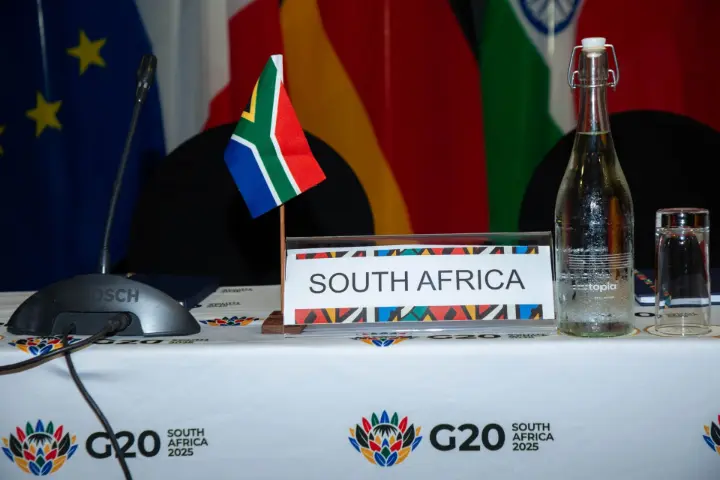
A defining moment for South Africa
Still, the symbolism is powerful. Hosting such dialogues during its G20 presidency positions South Africa as a bridge between developed and developing economies. If it can transform this moment into practical outcomes, like partnerships for fintech investment, fairer trade policies, and regional infrastructure projects, it could redefine its diplomatic profile well beyond 2025.
For grassroots entrepreneurs in Cape Town, Lagos, or Nairobi, such shifts could mean easier access to credit, safer digital payments, and a fairer shot at global trade.
South Africa has put financial inclusion at the centre of the world stage. The real test now is whether the promises made in Cape Town will echo across Africa’s markets or fade into another round of lofty communiqués.
Sources: