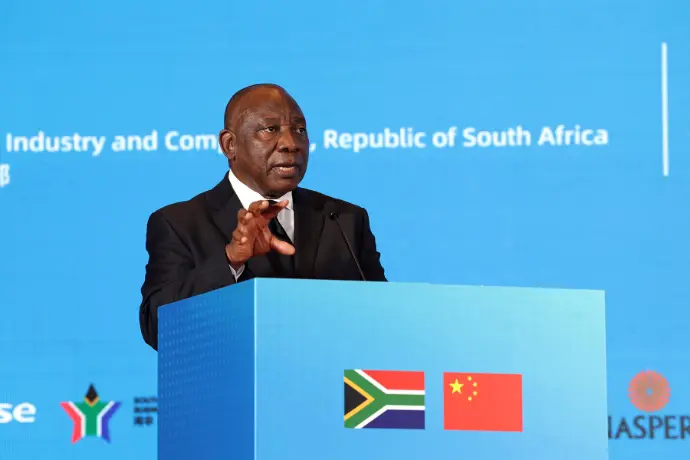
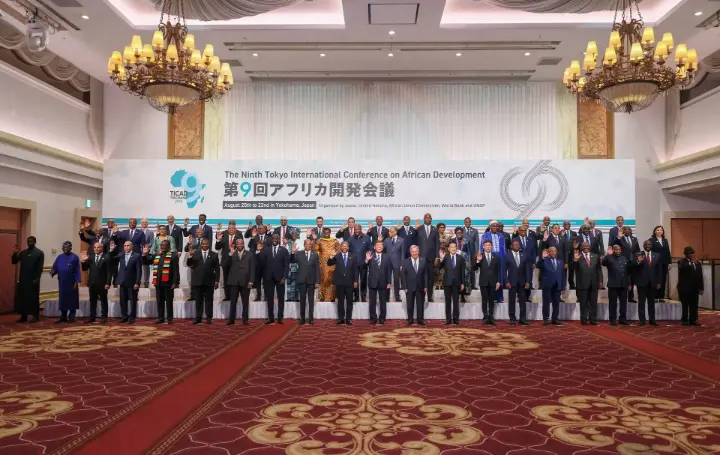
South African President Cyril Ramaphosa has called for stronger economic diplomacy and multilateralism to shield African economies from escalating global trade tensions. Speaking at the Ninth Tokyo International Conference on African Development (TICAD 9), held in Japan between 20–22 August 2025, Ramaphosa positioned South Africa as a gateway for investment and industrialisation on the continent.
“Africa cannot be a bystander in the reshaping of global trade rules,” Ramaphosa said, urging governments and businesses to view the continent as a hub for innovation and growth rather than a supplier of raw materials.
The summit, which brought together over 40 African leaders, Japanese Prime Minister Fumio Kishida, and international organisations, focused on co-creating innovative solutions for sustainable development. Japan announced commitments including up to $5.5 billion in concessional loans to African nations, the training of 30,000 AI professionals, and support for developing an Indian Ocean–Africa economic zone (Modern Diplomacy).
For South Africa, the message was clear: deeper engagement with Asia is crucial as global tariff pressures weigh heavily on African exporters. Ramaphosa emphasised that the country aims to become a continental industrial hub, attracting advanced manufacturing and technology investment, particularly in green energy and digital sectors (Polity).
Observers say Japan’s renewed interest signals its intent to balance China’s vast footprint on the continent. While Beijing remains Africa’s largest infrastructure financier, Tokyo is banking on a “quality growth” model focusing on sustainable technology, workforce training, and resilient supply chains (Japan Kantei).
The proposed Indian Ocean–Africa zone, if realised, could transform shipping and trade logistics across Eastern and Southern Africa, enhancing regional connectivity with Asia. Analysts note it also aligns with the African Continental Free Trade Area (AfCFTA), which seeks to boost intra-African trade and reduce external dependency.
Still, challenges remain. African states will need to negotiate terms that ensure long-term benefits, avoid debt burdens, and foster local capacity. Critics warn that without robust governance, foreign-led projects risk repeating patterns of dependency.
As TICAD 9 concluded, Ramaphosa’s push underscored a broader truth: in an era of geopolitical rivalry and economic uncertainty, Africa’s diplomatic leverage lies in presenting itself as both a partner and a player in shaping the future of global trade.
Sources: Polity, Modern Diplomacy, Japan Kantei, DIRCO South Africa.