When the International Monetary Fund (IMF) sends a delegation to Nairobi this week, it’s not just about balance sheets and fiscal reports. From 25 September 2025, IMF staff will sit down with Kenyan officials to discuss a potential support program. Behind the technical terms lies a much bigger question: how much sovereignty should Kenya trade for much-needed financial support?
Kenya, like many African economies, is walking a tightrope. On one hand, the government faces mounting debt pressures, rising import costs, and urgent social spending needs. On the other, ordinary Kenyans remain wary of IMF involvement, often linking it to painful austerity measures that hit public services and everyday livelihoods.

The IMF’s mission is part of a global pattern where African countries engage external lenders not only for money but also for legitimacy in international markets. An IMF stamp of approval can unlock other loans, stabilize investor confidence, and reassure rating agencies. But this often comes with strings attached: fiscal discipline, subsidy cuts, or tax hikes.
For Kenya, the stakes are particularly high. With elections still fresh in memory and economic recovery slow, every policy choice carries political weight. Will the government lean into IMF conditions, or will it push back to protect domestic priorities?
This is where the dance begins, a tango of diplomacy and economics. The IMF brings global leverage; Kenya brings political realities. Negotiations will test how far Nairobi can safeguard national interests while still securing external support. It is a delicate act of balance: protect sovereignty, but don’t close the door to much-needed funding.
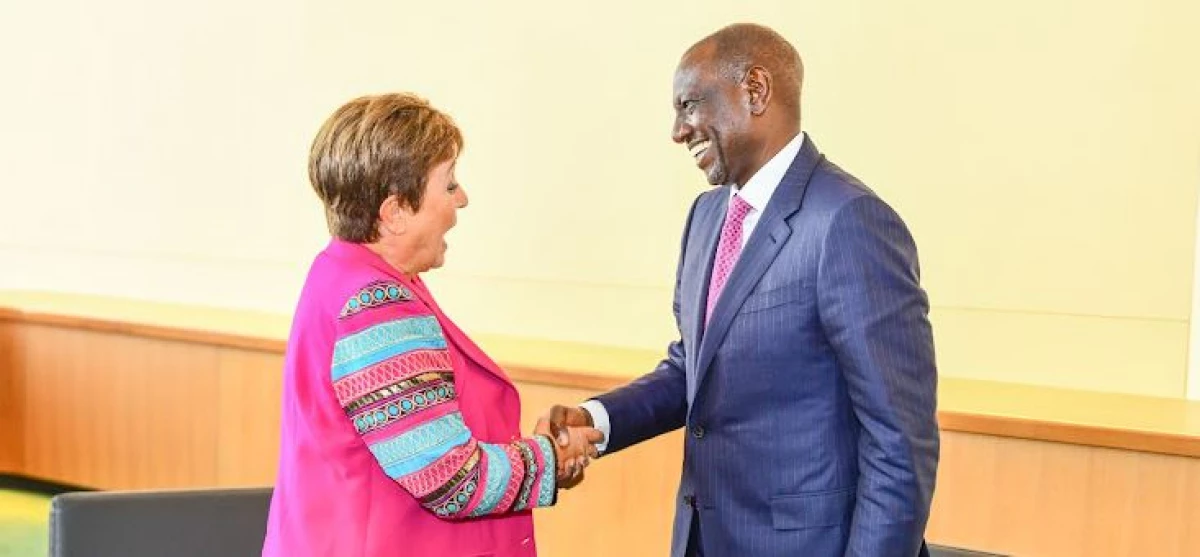
President William Ruto (right) greets IMF Managing Director Kristalina Georgieva in New York on September 20, 2023.
Kenya’s position could also shape how other African states view IMF engagements. A tough stance may inspire neighbors to demand fairer terms, while a softer approach could reinforce the IMF’s bargaining power across the region.
This moment is more than an economic conversation. It is about Africa redefining how it engages with global financial institutions. Kenya has a chance to set the tone not just for its own recovery, but for a continent increasingly eager to assert itself in international negotiations.
As the IMF mission unfolds in Nairobi, all eyes will be on how Kenya plays its diplomatic hand. Will it be a story of compromise, resistance, or a bold new approach to economic sovereignty?