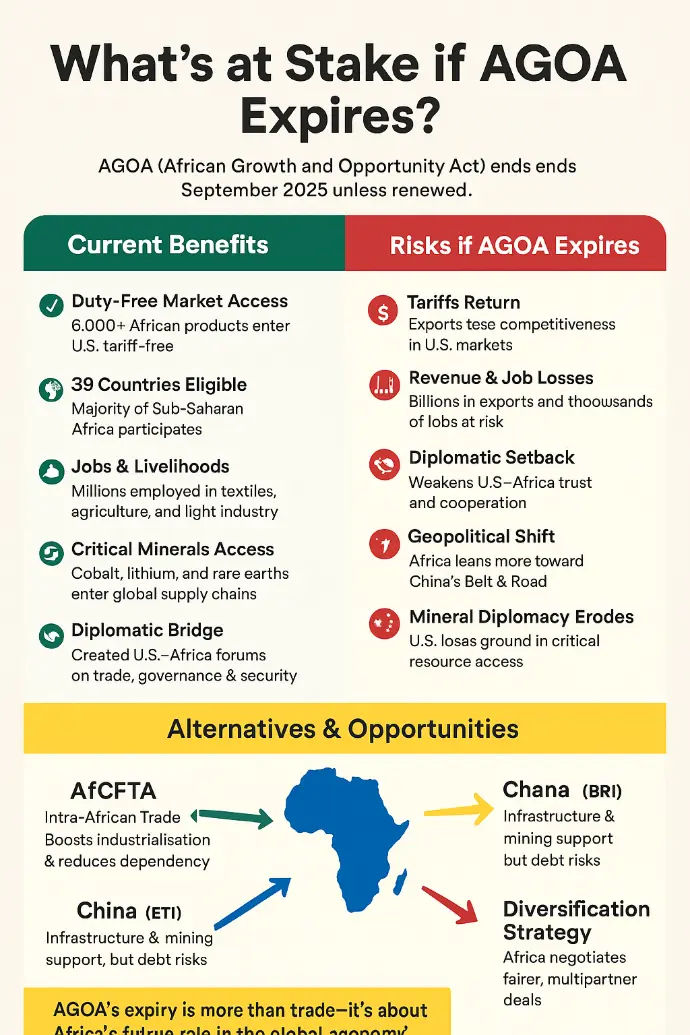
The countdown has begun. The African Growth and Opportunity Act (AGOA), a cornerstone of U.S.–Africa trade relations since 2000, is set to expire in September 2025 unless reauthorized by Washington. For Africa, AGOA has provided more than duty-free access to U.S. markets; it has created opportunities, supported livelihoods, and shaped diplomatic engagement. Yet as the deadline approaches, one question echoes across boardrooms and ministries: what does Africa stand to lose if AGOA disappears?
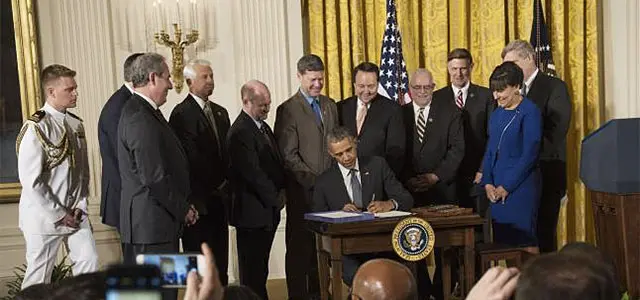
US President Obama signing the AGOA Trade Preferences Extension Act of 2015 into law.
Trade disruption at a fragile moment
AGOA has been critical for African exporters of textiles, agricultural products, and, more recently, the minerals driving the green energy transition. From cobalt in the DRC to lithium in Zimbabwe, these resources power electric vehicles and renewable technologies. Without AGOA, exporters face tariffs that would erode competitiveness in U.S. markets. The ripple effect? Reduced revenues, slowed industrialisation, and thousands of jobs at risk, particularly for youth and women who form the backbone of Africa’s manufacturing and agricultural value chains.
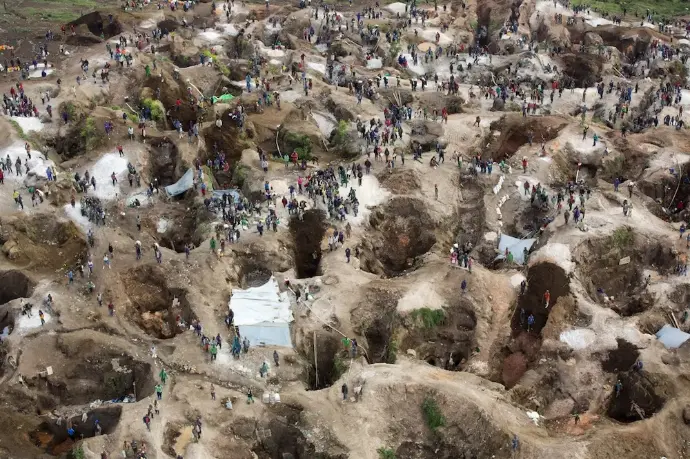
Luwowo coltan mine, near Rubaya, North Kivu. Photo: MONUSCO,
Mineral diplomacy in the crosshairs
Equally significant is the impact on mineral diplomacy. China has long outpaced the U.S. in African trade and investment, securing mining rights and building infrastructure under the Belt and Road Initiative. If AGOA expires, Africa may deepen its pivot to Beijing, reshaping global supply chains and diplomatic alignments. For Washington, this is not only an economic concern but a strategic setback in a world increasingly defined by competition over critical minerals.

Rethinking Africa’s strategic position
Beyond trade, AGOA has served as a platform for dialogue on governance, security, and development. Its expiry could weaken one of the few structured frameworks Africa has with the U.S., raising uncomfortable questions about Washington’s reliability as a partner. For African governments, this moment also underscores the urgency of diversifying markets and strengthening intra-African trade under the AfCFTA, so that no single partnership defines the continent’s economic future.
The path forward
Africa must not be a passive observer. As Washington debates AGOA’s renewal, African leaders and diplomats have a narrow window to lobby, negotiate, and reframe the partnership on terms that reflect Africa’s ambitions in the global economy. Whether in minerals, agriculture, or industry, Africa’s role is too strategic to be sidelined.
The stakes are high. AGOA’s future will signal whether the U.S. remains a serious partner for Africa or whether the continent’s next chapter will be written in stronger alignment with other global powers.
This debate is more than economics. It is about sovereignty, agency, and Africa’s place in a shifting world order. The time to shape the conversation is now.